 ultimate-guide
7 Facts About Stretch Ceiling Fire Safety You Need to Know
Last Updated: 30 October 2026
Quick Summary
A stretch ceiling fire rating is not automatic: most membranes achieve Euroclass B-s1 d0, which limits fire spread, smoke and flaming droplets, but this reaction-to-fire classification is not the same as fire resistance. Ask your installer for the test certificate and confirm whether the ceiling assembly itself needs fire resistance for your property type.
- B-s1 d0 means the membrane resists ignition, produces limited smoke and sheds no flaming droplets.
- Reaction to fire measures a material's contribution to fire growth, not how long an assembly holds fire back.
- Approved Document B limits combustible ceiling finishes, with tighter rules for flats, HMOs and protected escape routes.
- Plasterboard is often the more established choice where a tested fire-rated compartment is required.
- No polymer membrane is fireproof, so treat fireproof claims without a test certificate as overstatement.
Table of Contents
- Are Stretch Ceilings Fire Resistant? The Honest Answer
- What a Stretch Ceiling Fire Classification B-s1 d0 Actually Tells You
- How UK Building Regulations for Ceiling Finishes Apply to Stretch Ceilings
- Stretch Ceilings vs Plaster and Plasterboard in a Fire
- Do Stretch Ceilings Melt or Give Off Toxic Fumes?
- Are Stretch Ceilings Safe for Kitchens?
- Questions to Ask Before You Book a Stretch Ceiling Installation
- Frequently Asked Questions
Are Stretch Ceilings Fire Resistant? The Honest Answer
No, not automatically, and any installer who says otherwise is oversimplifying the stretch ceiling fire question. The honest answer is that a stretch ceiling's fire behaviour depends entirely on the membrane's tested classification and, more importantly, on whether the ceiling assembly has been assessed for fire resistance. This distinction matters most in kitchens, hallways and any room where a building control officer will ask questions.
Here is the short version: most stretch ceiling membranes are manufactured to achieve a reaction-to-fire classification, commonly Euroclass B-s1 d0. That is a real and useful standard. It is also not the same thing as a fire resistance rating, and conflating the two is the single most common mistake we see in this category.
Below, we break down what the classification actually means, how UK building regulations treat ceiling finishes, and the questions to put to any installer before you book.
What a Stretch Ceiling Fire Classification B-s1 d0 Actually Tells You
A B-s1 d0 classification describes how a material behaves when exposed to fire, not how long it can hold fire back. The "B" rates contribution to fire spread, "s1" limits smoke production, and "d0" means no burning droplets fall from the material during the test.
That combination is genuinely strong for a decorative ceiling finish. It means the membrane resists ignition, produces limited smoke, and does not shed flaming particles. For a domestic room, those are the properties that matter for safe evacuation and for limiting how quickly a fire grows.
What the classification does not tell you is whether the finished ceiling, complete with its tracking system and void behind it, provides a period of fire resistance. Those are separate questions with separate tests.
Reaction to Fire Is Not the Same as Fire Resistance
Reaction to fire and fire resistance are two different assessments, and mixing them up is where misleading marketing creeps in.
Reaction to fire measures how a material itself contributes to a fire's growth. Fire resistance measures how long a complete building element, such as a floor-ceiling assembly, maintains its integrity and insulation when attacked by fire. A membrane can score well on the first and still form part of an assembly that has never been tested for the second.
The UK government guidance on fire safety and construction products sets out this distinction clearly. If a project needs a fire-rated ceiling, ask for evidence of the assembly's fire resistance, not just the membrane's reaction-to-fire class.
The B-s1 d0 rating breaks down into three separate measures of how a membrane behaves in a fire.
| Rating element | What it measures | What it means |
|---|---|---|
| B | Contribution to fire spread | Resists ignition |
| s1 | Smoke production | Limited smoke in the test |
| d0 | Burning droplets | No flaming droplets fall |
How UK Building Regulations for Ceiling Finishes Apply to Stretch Ceilings
Approved Document B governs fire safety in buildings, and it places limits on how combustible internal linings, including ceiling finishes, may be. In domestic dwellings, the requirements are generally less onerous than in flats, communal areas or commercial buildings, but they still apply.
The practical upshot for a homeowner is this: a stretch ceiling membrane that carries a suitable Euroclass rating is usually acceptable as an internal lining in an ordinary house. Where the property is a flat, a house in multiple occupation, or a room over a protected escape route, the requirements tighten and the specification needs checking against the actual building.
We always recommend confirming the classification of the specific membrane being quoted, and asking for the test certificate rather than a marketing line. Building control officers will ask for that evidence, and a reputable installer will have it to hand.
Stretch Ceilings vs Plaster and Plasterboard in a Fire
Plaster and plasterboard are non-combustible or limited-combustibility materials, so they do not add fuel to a fire in the way a polymer membrane can.
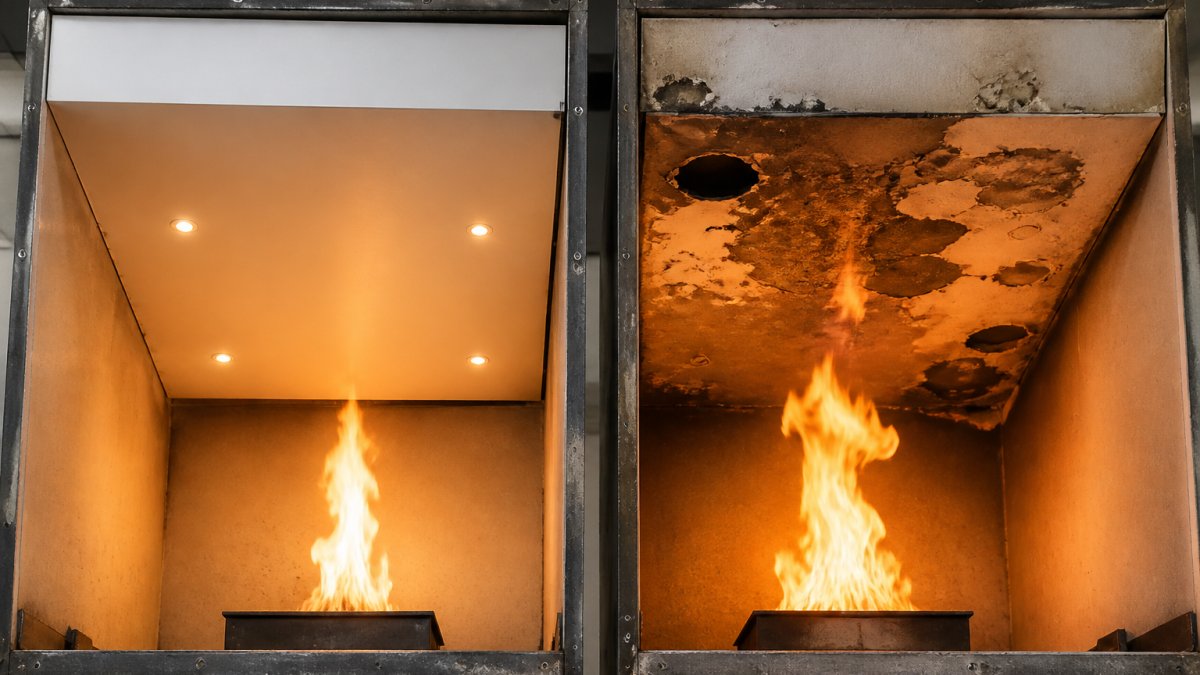
Where the comparison gets more nuanced is in the finished assembly. A plasterboard ceiling on timber joists has its own fire performance determined by board thickness, fixing and the void above. A stretch ceiling membrane with a B-s1 d0 rating performs well as a lining but sits in front of a void, and the assembly as a whole needs to be considered.
For most domestic rooms, the difference in real-world fire risk between a compliant stretch ceiling and a plastered one is small. For a fire-rated compartment, plasterboard is often the more established choice on tested performance. If you are weighing the two, our guide on whether to choose a stretch ceiling or standard ceiling sets out the trade-offs in more detail.
Do Stretch Ceilings Melt or Give Off Toxic Fumes?
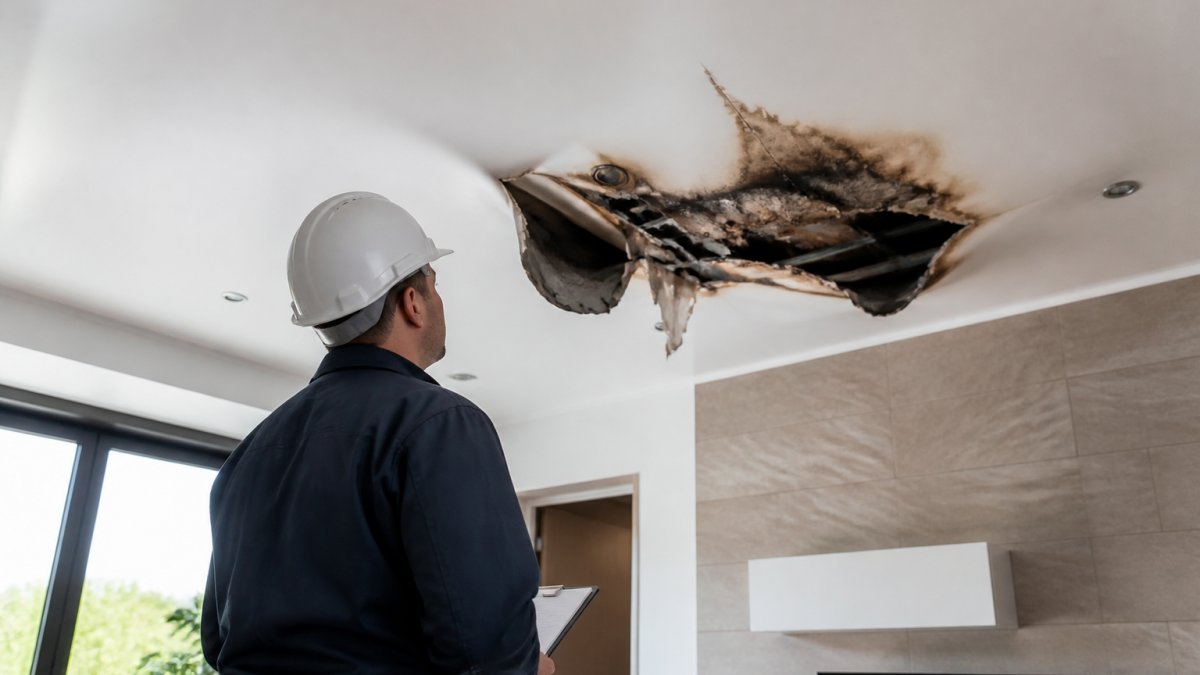
A stretch ceiling membrane will deform and can melt under sustained direct flame, and like most polymers it releases smoke and gases when it burns. The relevant question is how much and how quickly, which is exactly what the s1 and d0 parts of the classification measure.
An s1 rating means the material produces limited smoke in the test, and d0 means no flaming droplets. Those are the two properties that most affect whether occupants can get out safely. Materials that fail on smoke or droplets are the ones that cause real problems in a fire, not the presence of a polymer itself.
Watch out: any supplier claiming a stretch ceiling is "non-flammable" or "fireproof" without producing a test certificate is overstating it. No polymer membrane is fireproof. Ask for the classification document.
Are Stretch Ceilings Safe for Kitchens?
A stretch ceiling with an appropriate reaction-to-fire classification can be suitable for a domestic kitchen, provided it is specified and installed correctly. You can see how we specify a flawless kitchen ceiling that finishes the room properly. Kitchens combine heat, steam and cooking, so the membrane needs to handle moisture and localised warmth without issue, and the classification needs to be confirmed for the specific product.
A common mistake is choosing a membrane on appearance alone and never checking its fire documentation. In a kitchen, where a hob sits below the ceiling, that check is worth doing.
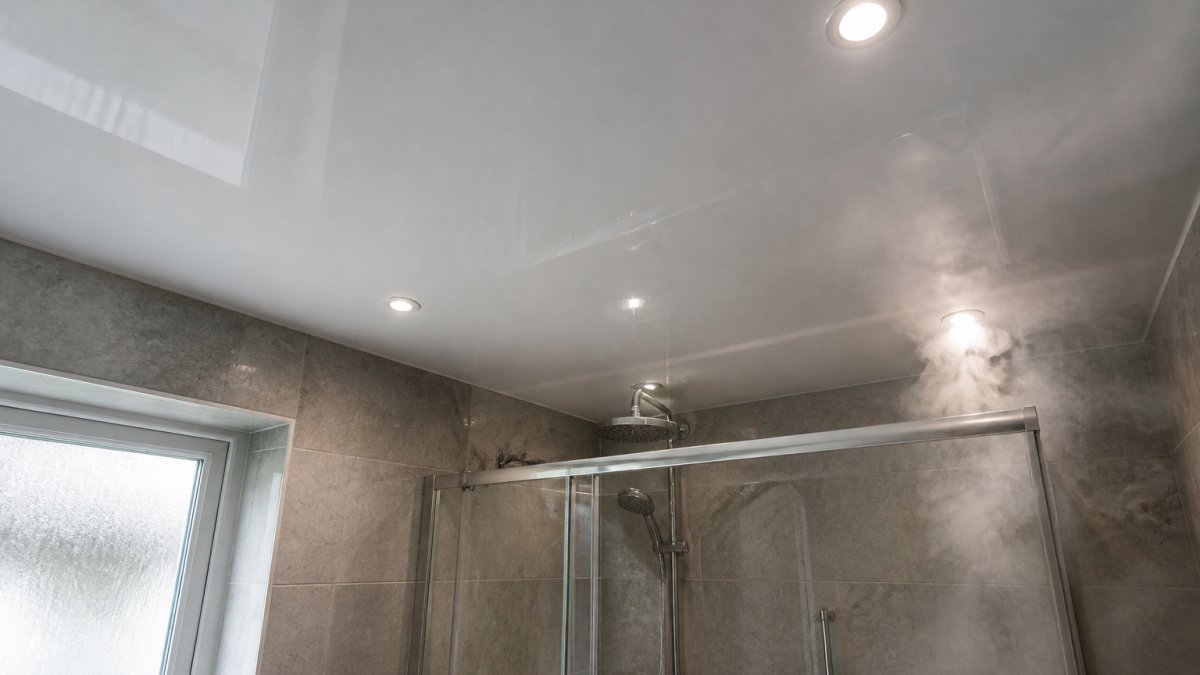
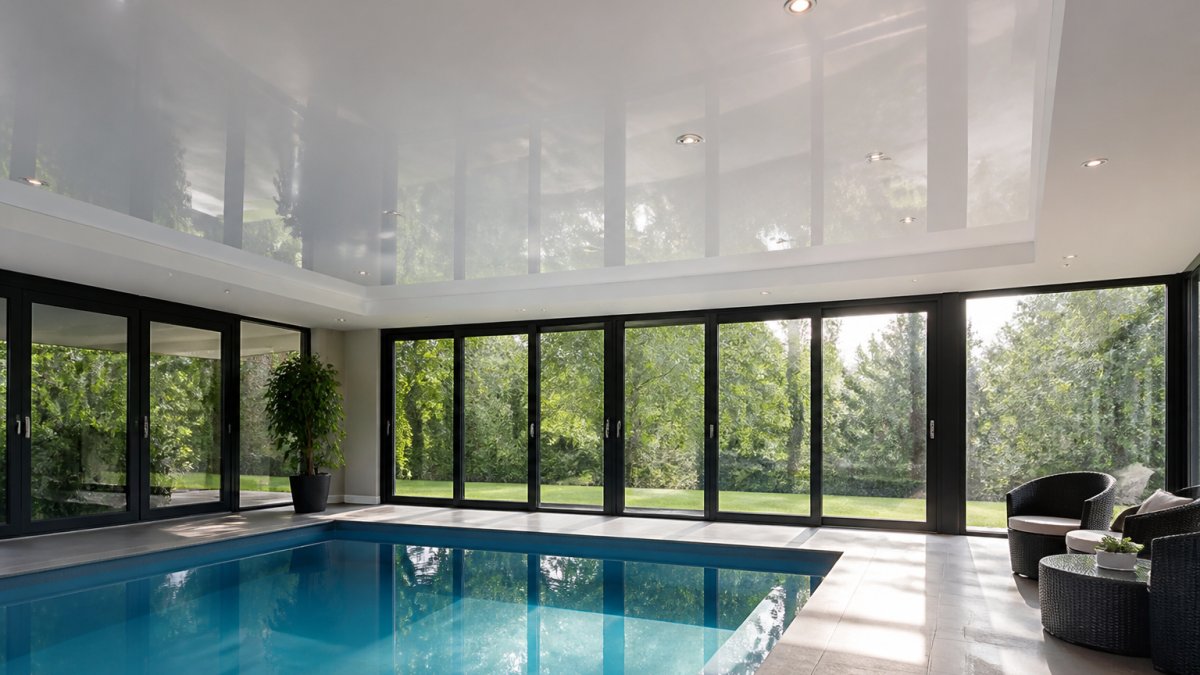
Stretch ceilings can suit kitchens when the membrane is specified correctly. For rooms with more demanding moisture, such as an indoor pool, confirm the product's suitability before booking.
Questions to Ask Before You Book a Stretch Ceiling Installation
Before you commit, put these questions to any installer, and expect clear answers backed by documents rather than reassurances.
- What is the Euroclass reaction-to-fire classification of the specific membrane you are quoting?
- Can you provide the test certificate, not just a marketing claim?
- Does the ceiling assembly need fire resistance for my property type, and if so, what evidence supports it?
- How does the specification change for a flat, an HMO or a room over an escape route?
- What is the warranty, and what does it cover?
A short, honest answer is a good sign. Evasiveness about certificates is not. Our guide on what to know before buying a stretch ceiling covers the full pre-purchase checklist, and if you are choosing between installers, our advice on how to choose a reliable stretch ceiling company will help you vet them. When you are ready to talk numbers, here is what to expect from the quote process.
Frequently Asked Questions
What is the fire rating of stretch ceiling materials?
There is no single rating that covers every stretch ceiling. Suppliers cite classifications such as Euroclass B-s1-d0 for some PVC membranes, and others claim Class 1 or M1 ratings from other markets. A classification describes how a material reacts to fire, not how long a ceiling assembly resists it. Ask your installer for the test certificate behind any claim, and check it matches the exact membrane and fixing system being fitted in your room.
Do stretch ceilings melt in a fire?
PVC membranes soften and can sag or drop when exposed to sustained high heat, so a stretch ceiling is not a fire barrier. What matters is how quickly the material ignites and how much heat and smoke it adds. A B-s1-d0 classification means limited contribution to fire growth and very little smoke production. If you need a ceiling that holds back fire for a set period, that is a fire resistance requirement and must be met by the structure above, not the membrane alone.
Are stretch ceilings compliant with UK building regulations?
Compliance depends on the room and the building, not the product name. Approved Document B sets reaction-to-fire expectations for wall and ceiling linings, with stricter rules in flats, escape routes and rooms such as kitchens. A membrane with a valid B-s1-d0 certificate supports compliance, but the whole assembly and its location decide it. Ask for the certificate, confirm who is responsible for sign-off, and check whether your project needs building control approval before work starts.
Are stretch ceilings safe for kitchens?
Yes, when the membrane carries an appropriate reaction-to-fire classification and is fitted with clearance from heat sources. Kitchens combine steam, grease and proximity to hobs, so specify a wipeable finish, keep the ceiling clear of direct flame and heat, and make sure extractor ducting is properly routed. Ask your installer how the membrane performs near a hob and whether the classification certificate covers the room you are fitting it in.
The fire question deserves a straight answer, not a sales line, and that is what we aim to give. Stretcharama installs stretch ceilings with the membrane classification documented, no plaster dust, and a finish that covers cracked or stained ceilings without the disruption of a full replaster. Get started with Stretcharama and specify your ceiling with the fire evidence in hand.