 how-to
How to Budget for Long Term Maintenance Costs of Plaster Ceilings
Last Updated: October 25, 2026
Quick Summary
Long term maintenance costs of plaster ceilings stay low for years, then climb sharply once the ceiling enters its declining stage at 30-50 years, when blown plaster, sagging and water damage bring rising, unpredictable bills. Budget for the plasterer's invoice plus making good, redecorating and days of lost room use, not just the repair itself.
- Plaster ceilings degrade in stages, with costs climbing sharply once they reach the declining stage.
- A crack that reappears within months signals a movement problem, not a decorating problem.
- Cheap quotes often exclude making good and redecorating, so they are partial quotes.
- Covering a ceiling avoids dust, redecorating and repeat repairs that replastering involves.
- Check the loft for leaks each year and deal with water stains immediately.
Table of Contents
- Why Plaster Ceiling Maintenance Costs Add Up Over Time
- Plaster Ceiling Lifespan: How Many Years Before Costs Climb
- How to Repair Cracks in a Plaster Ceiling Without Repeat Visits
- Plaster Ceiling Repair Cost: What Each Fix Really Sets You Back
- The Cost to Replaster a Ceiling Compared With Covering It
- Preventative Maintenance That Keeps Plaster Ceilings Cheaper to Own
- Request a Consultation for a Dust-Free Ceiling Upgrade
- Frequently Asked Questions
Why Plaster Ceiling Maintenance Costs Add Up Over Time
Plaster ceilings rarely fail all at once. They fail slowly, in small increments, and each increment costs money. A hairline crack here, a water stain there, a patch of blown plaster above a window. Left alone, those small faults turn into bigger ones, and the long term maintenance costs of plaster ceilings climb quietly in the background until a full repair lands on your budget all at once.
We often see the end result of that cycle constantly: ceilings that have been patched four or five times and still look tired.
The pattern is predictable. Plaster is a rigid surface fixed to a structure that moves. Timber joists expand and contract with the seasons. Older properties settle. Roofs leak a little before they leak a lot. Every one of those movements puts stress on a brittle finish, and brittle finishes crack.
Then there is the disruption cost, which rarely appears on a quote but always lands on you:
- Furniture moved and covered
- Rooms out of use for days
- Dust through the whole house
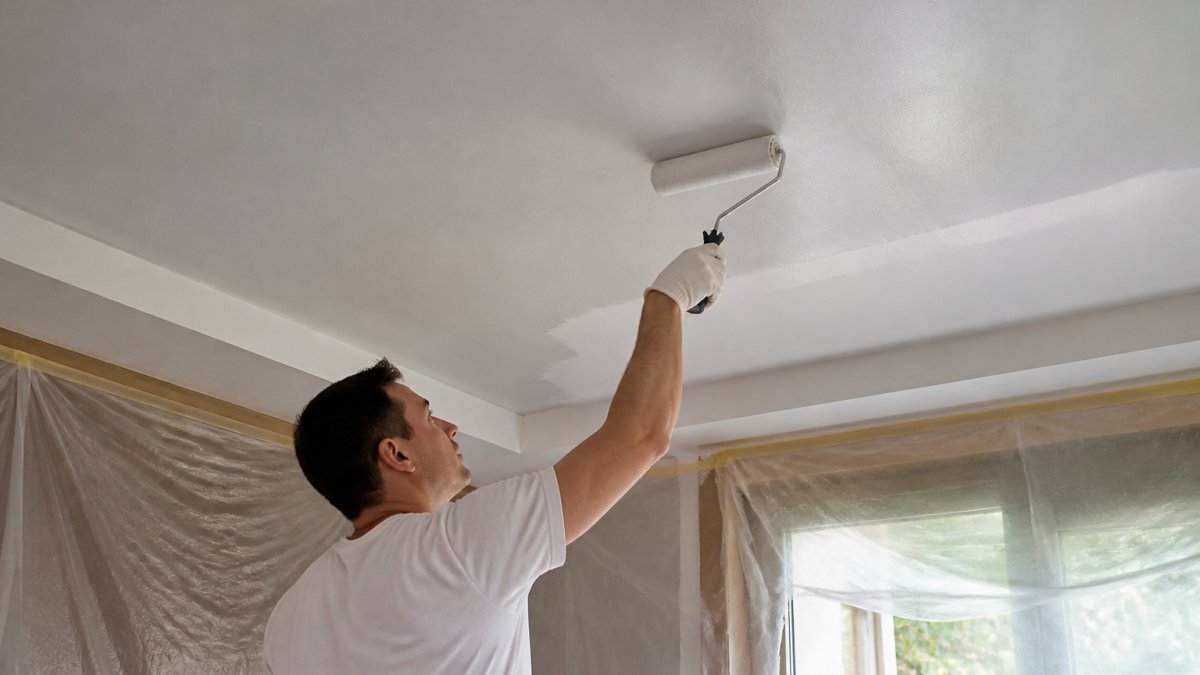
- Decorating afterwards to hide the repair
Add those together and the true cost of a plaster ceiling is never just the plasterer's invoice. It is the invoice plus the redecorating plus the days you could not use the room.
Plaster Ceiling Lifespan: How Many Years Before Costs Climb
A well-installed plaster ceiling can last decades, but "lifespan" is misleading. The ceiling does not expire on a fixed date. It degrades in stages, and the cost curve steepens at each stage.
Broadly, that curve looks like this:
| Stage | Typical Age | What Happens | Cost Pattern |
|---|---|---|---|
| Settled | 0-15 years | Hairline cracks, minor shrinkage | Occasional small fixes |
| Working | 15-30 years | Cracks widen, patches loosen | Regular repair visits |
| Declining | 30-50 years | Blown plaster, sagging, water damage | Rising, unpredictable bills |
| End of life | 50+ years | Sections failing, lath exposed | Replacement more sensible than repair |
The key point: costs do not rise in a straight line. They stay low for years, then climb sharply once the ceiling enters the declining stage. That is when a homeowner starts paying for the same ceiling over and over.
Signs Your Ceiling Is Nearing the End of Its Life
Watch for these signals. Any one of them means the ceiling is telling you something:
- Cracks that reappear within months of being filled
- Plaster that sounds hollow when tapped
- Visible sagging between joists
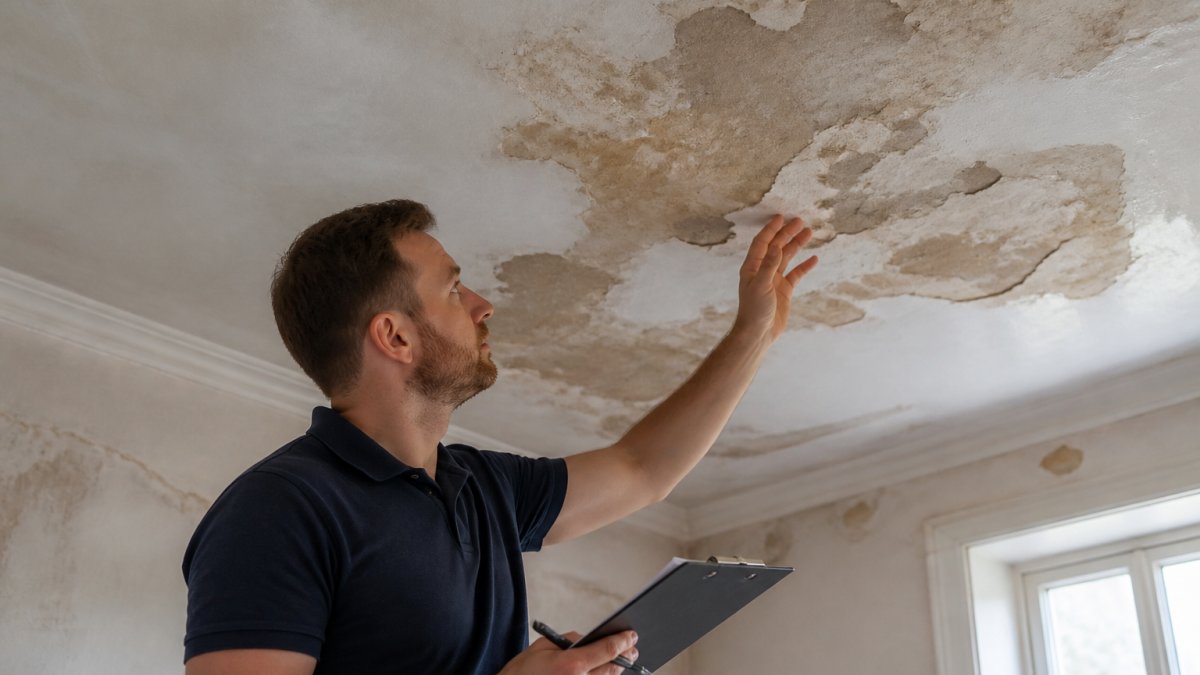
- Brown water stains that keep returning
- Chunks of plaster dropping without warning
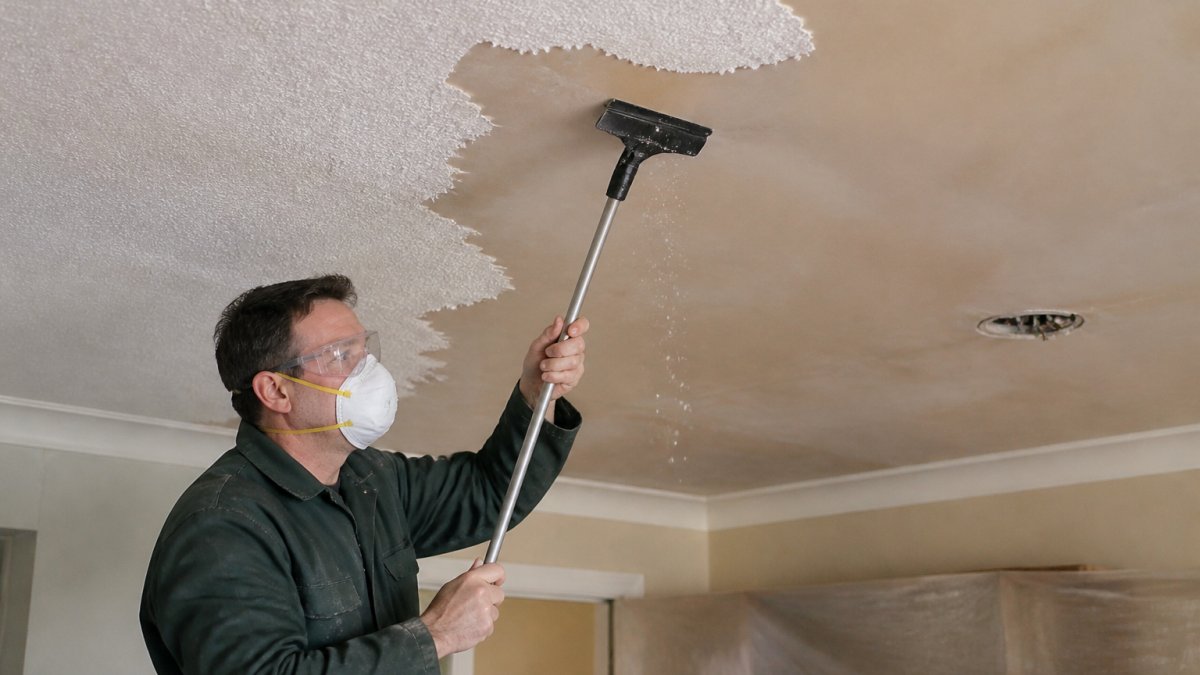
- Artex texture that has started to crumble
The reappearing crack is the big one. A crack that keeps coming back is not a decorating problem. It is a movement problem, and no amount of filler will solve it.
How to Repair Cracks in a Plaster Ceiling Without Repeat Visits
The honest answer is that most crack repairs fail because they treat the symptom, not the cause. Filling a crack in a moving ceiling is like painting over a damp patch. It looks fine for a season.
Here is how to repair cracks in a plaster ceiling so the fix actually holds:
- Test the surrounding plaster. Tap around the crack. Hollow sound means the plaster has lost its grip and filling is pointless.
- Open the crack properly. Widen it slightly into a V shape so filler has something to key into.
- Remove loose material. Anything crumbling must come out, not be glued back.
- Fill in thin layers. Thick single fills shrink and crack again.
- Tape and skim. A reinforcing tape over the repair spreads movement across a wider area.
- Check the cause first. If the crack follows a joist line or sits under a bathroom, find the movement or moisture source before you decorate.
The step most people skip is the first one. If the plaster around the crack is already loose, you are filling a hole in a failing surface. It will fail again.
Plaster Ceiling Repair Cost: What Each Fix Really Sets You Back
Plaster ceiling repair cost depends on three things: the size of the repair, the access, and whether the ceiling needs making good afterwards. A small crack fill is a short job. A section of blown plaster over a large area is a different proposition entirely.
Costs also vary hugely by region and by how much preparation is needed. Rather than quote figures that will not match your quotes, here is how the pricing actually breaks down:
- Small crack repairs: priced per job, usually a short visit
- Patch repairs: priced by area, plus making good and decorating
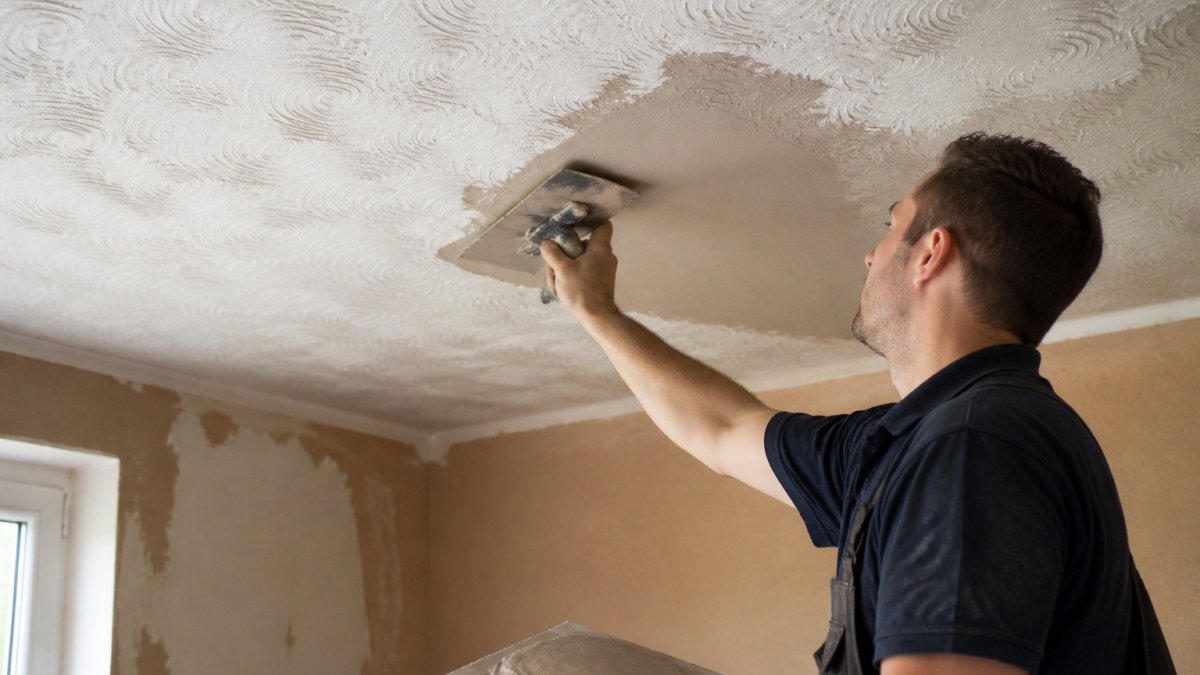
- Full reskim: priced by square metre across the whole ceiling
- Replacement: priced by area, plus removal and disposal of the old ceiling
Two costs get missed constantly. The first is making good: a repair leaves a patch, and a patch needs painting, and painting a patch rarely matches the rest of the ceiling. The second is access: high ceilings, stairwells and rooms full of furniture all add labour.
Watch out: a cheap quote that excludes making good and redecorating is not a cheap quote. It is a partial quote.
The Cost to Replaster a Ceiling Compared With Covering It
Here is where the maths gets interesting. The cost to replaster a ceiling is not one payment. It is a payment now, plus disruption, plus decorating, plus the chance of doing it again in a decade.
Covering the ceiling instead changes the equation. What is the cost of a stretch ceiling? A stretch ceiling is a tensioned membrane fixed below the existing ceiling, so the cracked or stained plaster stays exactly where it is and disappears behind a clean, seamless surface. No scraping. No skimming. No dust.

For anyone weighing up the two routes, it helps to see the flawless ceiling your home deserves, without the plaster dust. If you are still deciding whether covering justifies the outlay, we can discuss whether stretch ceilings are worth the outlay directly.
The comparison that matters is total cost of ownership, not the headline quote:
| Factor | Replastering | Covering |
|---|---|---|
| Dust and mess | High | None |
| Time in the room | Days to weeks | Usually a day |
| Redecorating needed | Yes | No |
| Repeat repairs | Likely over time | Not applicable |
| Finish | Depends on the plasterer | Seamless and consistent |
A replaster can be the right call for a ceiling in good structural condition with one isolated fault. For a ceiling that has been patched repeatedly, covering usually wins on both cost and hassle.
Preventative Maintenance That Keeps Plaster Ceilings Cheaper to Own
The cheapest plaster ceiling is a dry, stable one. Most expensive repairs trace back to moisture or movement that went unchecked.
A simple annual routine keeps costs down:
- Check the loft or room above for leaks after heavy rain
- Look for new cracks each autumn and note where they appear
- Deal with any water stain immediately, not at the next redecorate
- Keep bathroom and kitchen extractors working properly
- Avoid heavy fixings driven into old lath and plaster
- Recheck any previous repair after twelve months
Moisture is the biggest single driver. A ceiling below a bathroom or a flat roof lives with far more risk than an internal one, and a small leak caught early is a fraction of the cost of a ceiling that has been quietly soaking for a year.
If you are weighing up long-term ownership, it is worth reading should I choose a stretch ceiling or standard ceiling? before committing to another round of repairs.
Request a Consultation for a Dust-Free Ceiling Upgrade
The challenge is simple: plaster ceilings demand attention, and every round of attention costs money and disruption. At some point, patching stops being maintenance and starts being a subscription.
Stretcharama offers a different route. Our stretch ceilings cover cracked or stained plaster without any of the mess, modernise outdated Artex finishes, and deliver a flawless ceiling finish with no plaster dust and no delays. For rooms with moisture, including indoor swimming pools, the membrane holds up where plaster struggles.
Tell us about the ceiling your home deserves and we will talk you through the options.
Frequently Asked Questions
How often does a plaster ceiling need maintenance?
Most plaster ceilings need a check every couple of years and minor filling of hairline cracks as they appear. Repairs become more frequent once the ceiling passes 30 to 40 years old, particularly in kitchens and bathrooms where moisture and heat cycling loosen the skim. Keeping the room ventilated and fixing leaks early stretches the gaps between repairs. If you are filling the same cracks every year, that is a signal the plaster is failing rather than settling, and covering the ceiling can work out cheaper than repeated patch jobs.
How much does plaster ceiling repair cost compared with other ceiling options?
Repair prices vary with the size of the area and the access needed, so get a written quote rather than relying on a headline figure. Published cost guides put ceiling repairs in a broad range depending on whether you need a patch, a full skim or a replacement section. A stretch ceiling is quoted per square metre for your room, so ask for a like-for-like comparison covering the whole job, including making good and redecorating after plastering, not just the plasterer's day rate.
Can a cracked plaster ceiling be repaired without replacing it?
Yes, in most cases. Hairline and shrinkage cracks can be raked out, filled and sanded, and larger cracks are often bridged with tape before skimming. The limit is when the plaster has lost its grip on the lath or board behind it: if the ceiling sounds hollow, sags or the cracks keep returning in the same place, patching is throwing money at a failing surface. At that point, either a full replaster or a tensioned ceiling that covers the old surface outright makes more financial sense.
Are plaster ceilings expensive to maintain compared with other ceiling types?
Plaster is cheap to patch but demands repeat attention: cracks, staining and skim failure all come back over the decades, and each visit carries labour and redecoration costs. A tensioned stretch ceiling has little to maintain beyond occasional cleaning with a soft cloth, and it hides the cracks and stains underneath rather than chasing them. Over a long ownership period, the total spend on plaster repairs can exceed the one-off cost of covering the ceiling, especially in moisture-heavy rooms such as pool halls and bathrooms.
If your ceiling has been repaired more times than you can count, it is time to stop paying for the same problem. Get started with Stretcharama and upgrade to a clean, seamless ceiling that needs no patching, no skimming and no dust sheets.