 how-to
Is It Illegal to Plaster Over Artex?
Last Updated: 4 November 2026
Quick Summary
Plastering over Artex is not illegal in the UK, but whether you should do it depends on whether the coating contains asbestos and whether it is sound. Test the Artex first, since only a laboratory result shows whether plaster over Artex is safe to attempt.
- Plastering over Artex is not illegal in the UK.
- Artex applied mostly between the 1950s and early 1990s may contain asbestos.
- Only a laboratory test reliably shows whether Artex contains asbestos.
- Do not scrape, sand, drill or scrub Artex before it has been tested.
- Tell any plasterer or builder about the Artex and get the test result in writing.
Table of Contents
- Can You Plaster Over Artex That Contains Asbestos?
- Testing Artex for Asbestos Before You Start
- Who Is Responsible for Asbestos Checks and Communication
- Preparing an Artex Ceiling for Plastering
- Removing an Artex Ceiling Instead of Plastering Over It
- Mistakes to Avoid and When to Call a Professional
- Booking a Stretch Ceiling Consultation as an Alternative
- Frequently Asked Questions
Plastering over Artex is not illegal in the UK, but whether you should do it depends on what the coating is made of and what condition it is in, since the decision to plaster over Artex turns on those two factors. That single question decides whether you can skim over it yourself or need a professional and a test first. This guide sets out the rules, the risks and the practical steps in plain English.
Artex is a textured coating applied to ceilings and walls, mostly between the 1950s and the early 1990s. Many of these coatings contain asbestos, and that is why the question matters. Practical guidance from plastering and environmental firms is consistent on one point: a firmly bonded, dry and undamaged coating can often be skimmed, while Artex that may contain asbestos should be tested before anyone disturbs it.
Can You Plaster Over Artex That Contains Asbestos?
You can cover asbestos-containing Artex with a new layer, but only if the existing coating is sound and the work is handled carefully. Covering is not the same as removing or sanding, and that distinction is the heart of the safety question.
Environmental specialists generally advise against plastering over Artex that contains asbestos, and they recommend telling your plasterer or builder before any work starts. Their concern is that preparation, such as scraping, sanding or drilling, releases fibres into the air.
Here is a simple way to think about it:
- Sound and tightly bonded: A skim may be possible after testing or expert advice.
- Cracked, flaking or crumbling: Do not disturb it. Get it assessed first.
- Unknown age or unknown contents: Assume it may contain asbestos until a test says otherwise.
Testing Artex for Asbestos Before You Start
A laboratory test is the only reliable way to know whether your Artex contains asbestos. Visual checks cannot tell asbestos apart from other materials, so do not rely on looks alone.
Testing usually involves a qualified surveyor taking a small sample, which is then analysed in a laboratory. Costs and turnaround times vary, so ask for a written quote and a clear report.
Before any sampling or work, follow these steps:
- Stop all work near the ceiling and keep people and pets out of the room.
- Avoid scraping, sanding, drilling or scrubbing the surface.
- Book a qualified asbestos surveyor or accredited testing service.
- Keep the room closed and ventilated only as the surveyor advises.
Who Is Responsible for Asbestos Checks and Communication
The keyword asks whether plastering over Artex is illegal, and the honest answer is that the legality turns on disturbance and duty, not on the act of covering. In practice, the law is less interested in whether a new skim of plaster sits on top of an old textured coating and more interested in whether anyone is likely to release asbestos fibres while preparing or working on it. That is why responsibility is split between the person who owns or occupies the property and the tradesperson who carries out the work.
A homeowner doing DIY work is not exempt from the risks, but the formal duties that require a written plan, training and controlled procedures attach most clearly to contractors and employers. Most practitioners treat the practical dividing line this way: a homeowner can choose to cover an intact, tested coating, but once work involves disturbing material that may contain asbestos, the safe route is to stop and bring in a competent person.
For a tradesperson, the duty to identify asbestos before work begins is well established. A plasterer, builder or decorator who is asked to skim a ceiling should ask what the coating is, when the building was constructed, and whether any asbestos survey or test result exists. If the answer is unknown, the responsible course is to arrange testing or walk away rather than sand or scrape on assumption. A common pattern is for a plasterer to price the job on the basis that the surface is sound and then discover, mid-preparation, that the texture is flaking, at which point work should stop.
Communication matters as much as the check itself. Tell every tradesperson who quotes or works on the ceiling that Artex is present and whether it has been tested. Put it in writing, even if only in a message or email, and ask them to confirm what they will and will not disturb. If a contractor says they will 'just scrape the high spots', that is the moment to ask whether they have seen a test result.
Watch out: a verbal assurance that 'it'll be fine' is not a substitute for a test result or a competent assessment, and it will not protect anyone if fibres are released.
If you are unsure of your legal position in a specific case, for example, where a tenant, landlord or managing agent is involved, seek advice from a solicitor or from the relevant environmental health team at your local authority.
Preparing an Artex Ceiling for Plastering
If testing shows the coating is safe to skim, preparation makes the difference between a lasting finish and one that peels off within a year. Work methodically and keep dust down throughout.
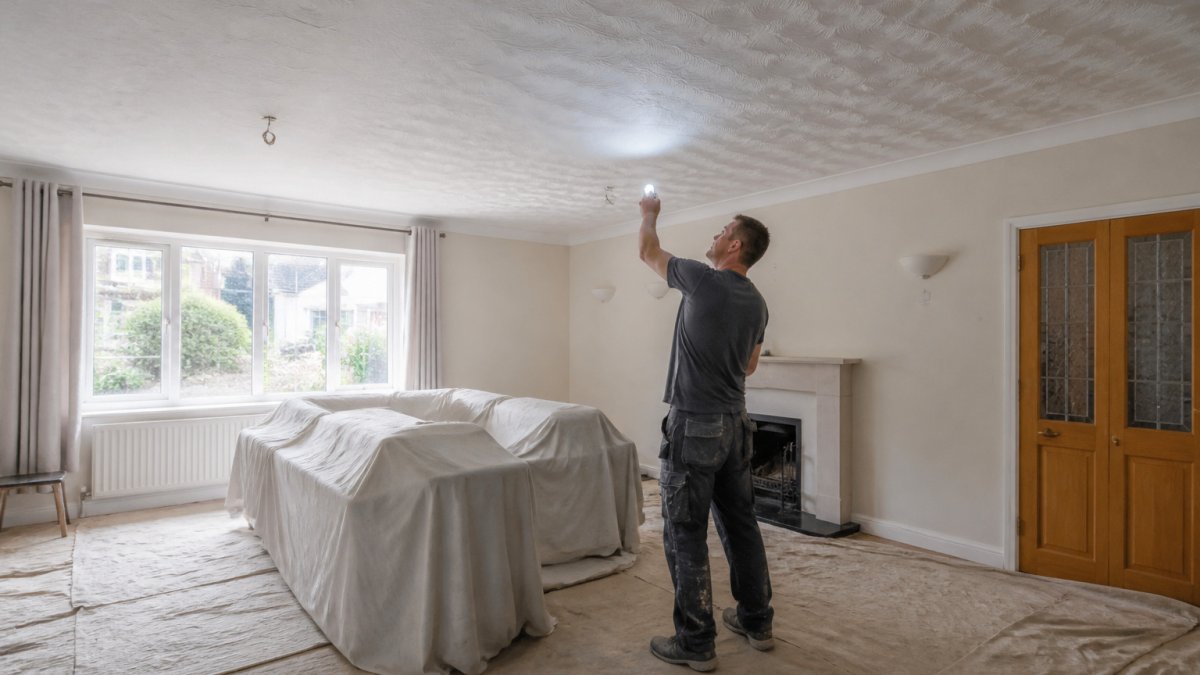
- Inspect the surface. Look for loose, flaking or cracked areas.
- Protect the room. Cover floors and furniture, and seal doors with dust sheets.
- Clean and check adhesion. Remove loose material only if it is confirmed as safe to do so.
- Apply a bonding coat or suitable primer. This helps the new plaster stick to the existing surface.
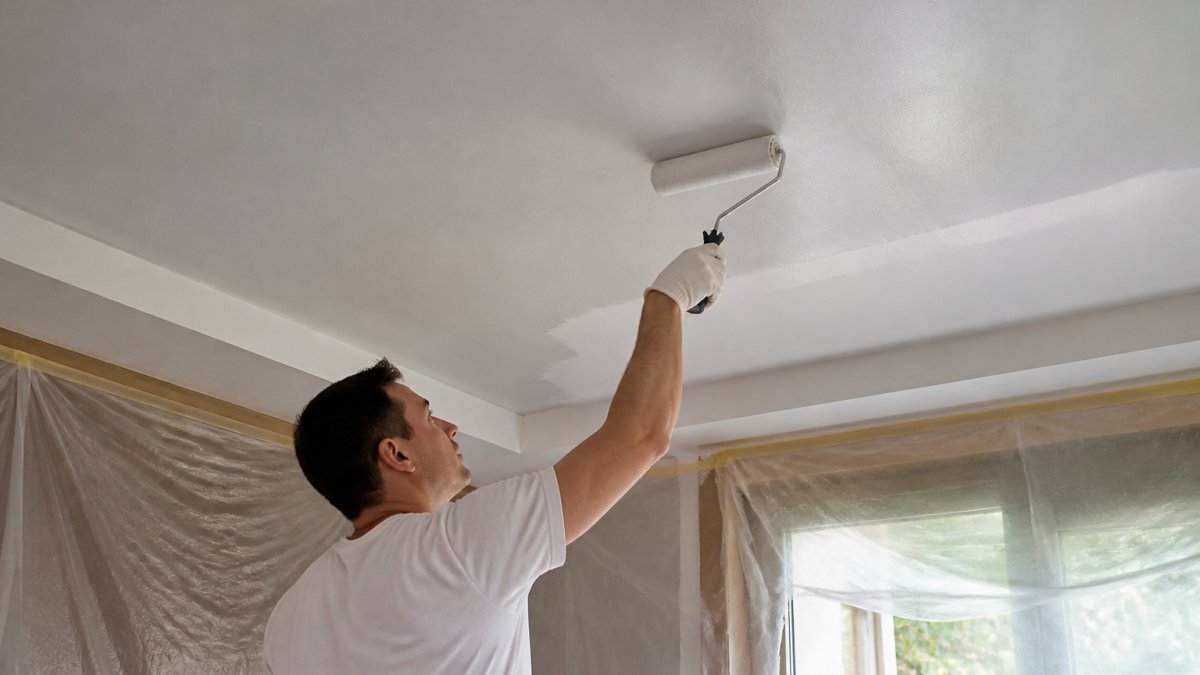
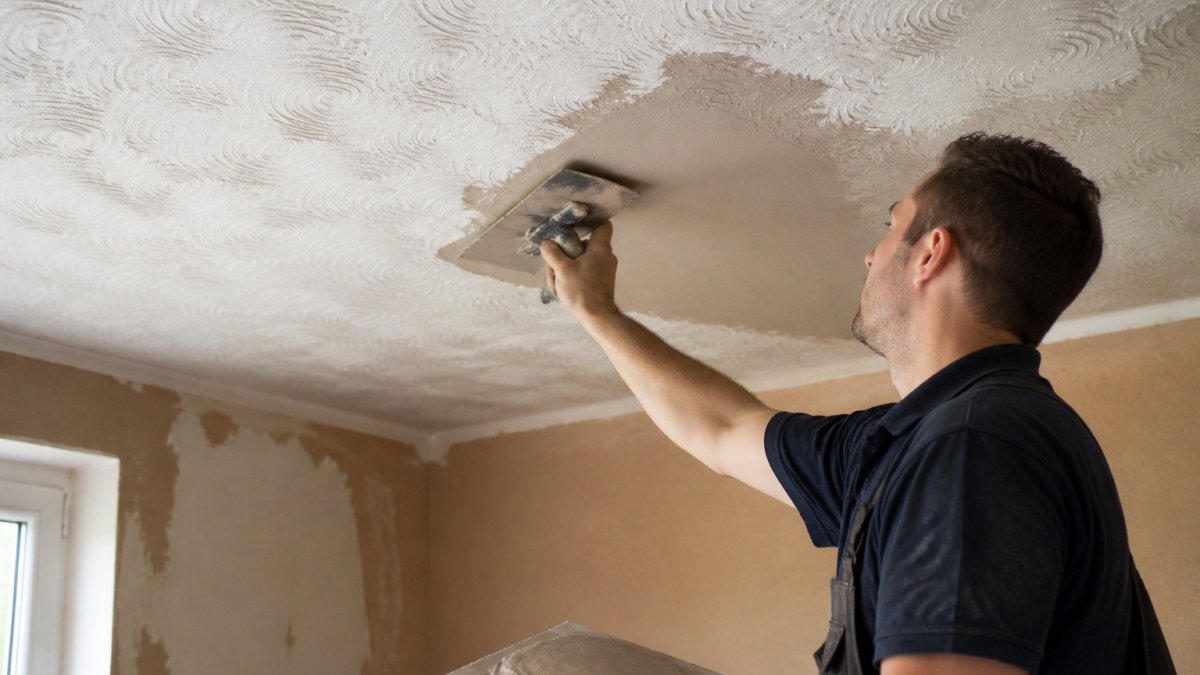
- Skim in thin layers. Build up the finish gradually and let each coat dry.
What Counts as Disturbing Artex During Preparation
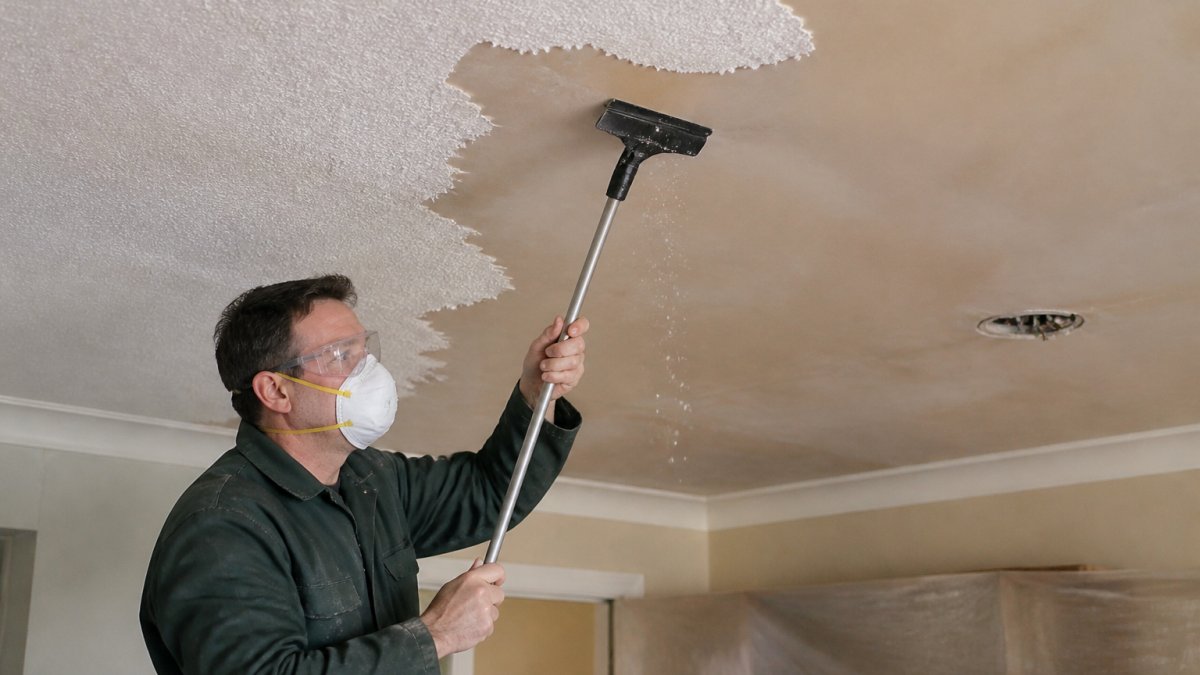
Disturbing Artex means doing anything that breaks up or releases material from the surface. Scraping off texture, sanding, drilling, chiselling and aggressive scrubbing all count. Even gently wiping a crumbling area can release fibres, so treat any damaged coating with caution.
Simply painting over an intact, sealed surface is generally lower risk than mechanical preparation. Still, if you are unsure what the coating is, treat it as potentially hazardous.
If testing shows the coating is safe to skim, the preparation steps below make the difference between a lasting finish and one that peels off.
| Step | What to do | Time or frequency |
|---|---|---|
| Inspect the surface | Look for loose, flaking or cracked areas | Before any work starts |
| Protect the room | Cover floors and furniture, seal doors with dust sheets | Before any work starts |
| Clean and check adhesion | Remove loose material only if confirmed safe | Before any work starts |
| Apply bonding coat or primer | Helps new plaster stick to existing surface | Before skimming |
| Skim in thin layers | Build up the finish gradually | Let each coat dry |
Removing an Artex Ceiling Instead of Plastering Over It
Removal is the most thorough option, but it is also the most disruptive and the most carefully regulated when asbestos is present. Where Artex contains asbestos, removal should only be carried out by licensed or qualified specialists following proper controls.
If the coating is not asbestos, removal is more straightforward, though it still produces a lot of dust. Many homeowners find that removing the texture gives a better base for a smooth finish.
Mistakes to Avoid and When to Call a Professional
- Assuming the coating is safe because it looks old but intact.
- Sanding or scraping first and testing afterwards. Test before you disturb.
- Skimming over damaged areas without fixing the underlying problem.
- Ignoring the bonding stage, which often causes plaster to fail.
Call a professional if the coating is cracked or flaking, if the test is positive, or if you are not confident doing the preparation safely. A qualified plasterer can advise on the right route for your ceiling.
Booking a Stretch Ceiling Consultation as an Alternative
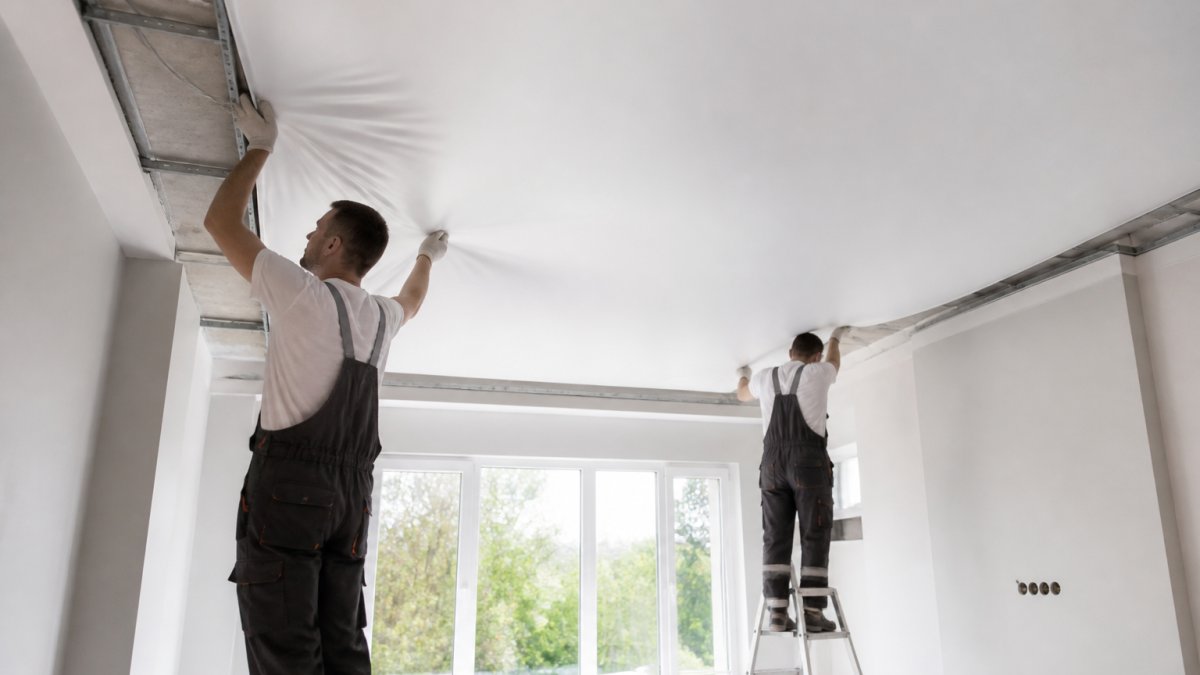
If testing, preparation and the risks feel like too much hassle, a stretch ceiling may be a practical alternative. Stretch ceilings can cover cracked or stained ceilings and modernise outdated Artex without plaster dust, and suit homes where you want a flawless finish with less disruption. Pricing depends on quantity, dates and delivery, so the best next step is a consultation: request a consultation to see whether a stretch ceiling fits your room.
Frequently Asked Questions
Is it illegal to plaster over Artex?
Plastering over Artex is not automatically illegal in the UK. The question turns on the condition of the coating and whether it contains asbestos. If the Artex is firmly bonded, dry and undamaged and does not contain asbestos, it can usually be skimmed following normal practice. If it may contain asbestos, you should have it tested first, because covering material that contains asbestos without proper controls can expose people to fibres during the work. Where asbestos is confirmed or suspected, a licensed or competent professional should advise on the safest route.
Can you plaster over Artex that contains asbestos?
Covering asbestos-containing Artex is sometimes possible, but it is not a decision to make without information. Plastering over the coating still involves disturbing its surface, which can release fibres. Many professionals advise that work on asbestos-containing material should only proceed after a survey and laboratory analysis, with appropriate controls in place. It is worth getting written advice from a qualified surveyor before any skimming starts.
Do I need to test an Artex ceiling for asbestos before plastering?
Artex may contain asbestos, particularly in older properties. Sampling the coating and sending it to an accredited laboratory is the reliable way to find out. Because the ceiling will be disturbed by skimming, testing is strongly advisable before work begins, and you should tell your plasterer or builder about the result so they can plan the job safely.
Is it safer to plaster over Artex or remove it?
Covering Artex is usually less disruptive than removing it, but it is only safer when the coating is sound and its asbestos status is known. Removal disturbs the material heavily and creates the most dust, so it is generally a job for specialists if asbestos is present. Skimming a sound, non-asbestos ceiling is typically the simpler option. If the coating is flaking or cracked, the surface must be repaired or stabilised before any plaster is applied.