 how-to
Can You Paint Over Stretch Ceiling Material?
Table of Contents
- Can You Paint a Stretch Ceiling? The Short Answer
- Can You Paint a PVC Stretch Ceiling?
- Can You Paint a Fabric Stretch Ceiling?
- What Happens When You Paint Over Stretch Ceiling Material
- How to Clean a Stretch Ceiling Instead of Painting
- Stretch Ceiling Repair and Restoration Options
- Why Stretch Ceilings Eliminate the Need for Repainting
- Frequently Asked Questions
Last Updated: October 23, 2026
Can You Paint a Stretch Ceiling? The Short Answer
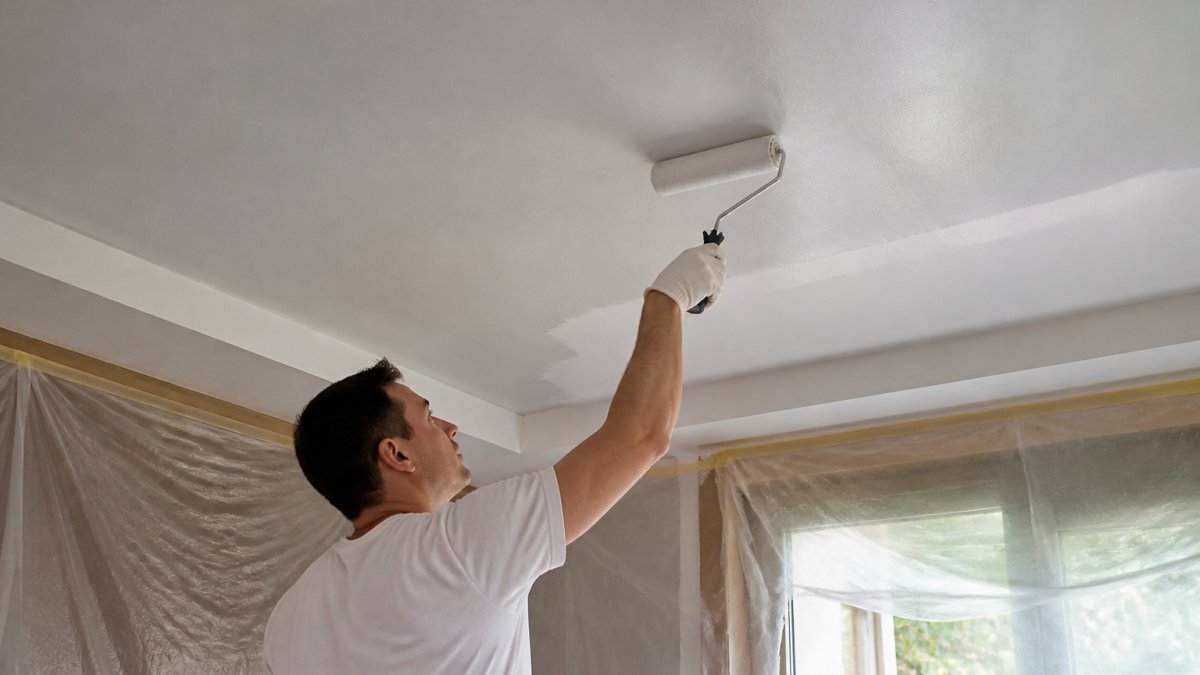
No, you cannot paint over stretch ceiling material. Stretch ceilings are designed to arrive as a finished product, requiring no additional painting or finishing once installed. Attempting to paint them creates more problems than it solves.
Here's why this matters: if you're considering a stretch ceiling, you're already thinking about avoiding mess and disruption. Painting defeats that entire purpose. The material itself resists paint adhesion, and the weight of accumulated paint layers causes the fabric or PVC membrane to sag over time. Stretch ceiling installation guides confirm that repainting is simply not a viable maintenance strategy for these systems.
At Stretcharama, we help homeowners understand this upfront. Many prospects ask whether they can refresh a stretch ceiling with paint down the road. The answer is straightforward: design your ceiling finish at installation, because changing it later isn't practical.
Can You Paint a PVC Stretch Ceiling?
Painting PVC stretch ceilings is technically difficult and generally not recommended. PVC membranes are pre-finished at manufacture with a glossy or matt coating. Paint does not bond well to this elastic surface.
The material's flexibility works against paint adhesion. When the membrane expands and contracts with temperature changes, paint cracks and peels. PVC is designed to remain as-is, any surface treatment applied after installation will fail prematurely.
Replacement is the standard solution if a PVC ceiling becomes damaged or discoloured. Rather than attempting to paint over it, you remove the old membrane and install a fresh one.
Can You Paint a Fabric Stretch Ceiling?
Fabric stretch ceilings present a different challenge. These membranes can technically accept paint, but the practical limitations are severe.
According to fabric ceiling maintenance data, fabric stretch ceilings can be repainted a maximum of 4 to 6 times before the accumulated weight of paint causes the material to sag. Each coat adds mass that the fabric structure must support. Eventually, the weight becomes too much.
The real issue is cost and effort. Repainting requires professional application to avoid drips and uneven coverage. You're paying for labour and materials repeatedly.
Most installers recommend treating paint as a last resort. Use it only when the fabric is heavily marked or stained and cleaning alone won't restore appearance. Even then, apply only one thin coat.
What Happens When You Paint Over Stretch Ceiling Material
Painting a stretch ceiling creates a cascade of problems. Understanding these outcomes explains why manufacturers and installers discourage it entirely.
Paint adhesion fails. Stretch ceiling membranes have a smooth, non-porous finish designed to repel water and resist staining. Paint primers and topcoats are formulated for porous surfaces like plasterboard. On a stretch ceiling, paint sits on top rather than bonding. Within weeks, it begins to peel and flake.
The membrane sags under weight. Paint adds mass. A single coat weighs more than you'd expect when applied across a large ceiling area. Fabric membranes, already under tension, begin to bow downward as paint accumulates. Stretch ceiling structural data documents that this sagging is permanent, the membrane cannot return to its original tautness.
Temperature cycling causes cracking. Stretch ceilings expand and contract slightly with seasonal temperature changes. Paint is rigid. As the membrane moves beneath it, paint cracks and eventually peels away in sheets.
Moisture becomes trapped. Paint seals the membrane surface. If any moisture gets behind the paint, it cannot evaporate. This creates conditions for mould and mildew growth inside the membrane itself, a problem you cannot see or easily fix.
The result is a ceiling that looks worse than before, plus the cost of professional removal and reinstallation to correct the damage.
How to Clean a Stretch Ceiling Instead of Painting
Cleaning is your best maintenance strategy for stretch ceilings. Regular cleaning keeps them looking fresh without the risks of painting.
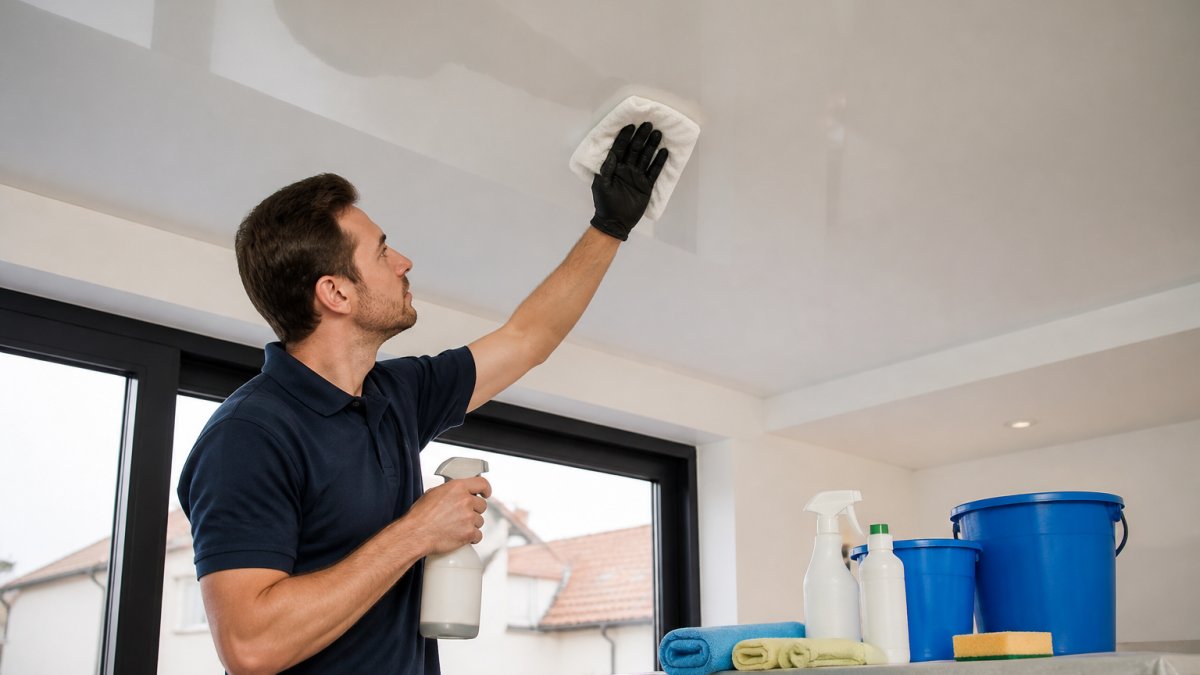
Stretch ceilings resist mould, mildew, and moisture, eliminating the need for the regular repainting often required by traditional plaster ceilings in humid environments. This is one of their key advantages. A simple cleaning routine maintains their appearance for years.
Basic cleaning steps:
- Use a soft microfibre cloth or sponge
- Mix warm water with a small amount of mild detergent
- Wring out the cloth so it's damp, not wet
- Gently wipe the ceiling surface in circular motions
- Avoid abrasive scrubbers or harsh chemicals
- Dry the surface with a clean, dry cloth
For stubborn marks, acrylic paint can be used as a last resort. According to professional cleaning guidance, repainting with acrylic is considered a final option to restore uniform appearance when the fabric is heavily marked. Even then, apply only a single thin coat.
Most stains come off with gentle cleaning alone. Dust, fingerprints, and minor discolouration respond well to this method. Save painting for situations where cleaning genuinely fails.
Stretch Ceiling Repair and Restoration Options
If your stretch ceiling is damaged, torn, or severely discoloured, repair or replacement is more practical than painting.
Small punctures or tears can sometimes be patched by your installer. They apply a fabric or vinyl patch using adhesive designed for the membrane material. This works for damage smaller than a few centimetres. Larger damage requires membrane replacement.
Severe discolouration that doesn't respond to cleaning points to replacement. Stretch ceilings do not discolour over time under normal conditions, so heavy staining usually indicates environmental problems, moisture, smoke, or chemical exposure. Cleaning the old membrane won't solve the underlying issue. A fresh membrane addresses both the stain and the cause.
Sagging membranes need professional assessment. Minor sagging can sometimes be corrected by adjusting the tension in the installation frame. Significant sagging usually means membrane replacement.
Replacement is faster and cheaper than you'd expect. Professional installers can remove the old membrane and install a new one for most rooms. The process creates minimal disruption compared to traditional ceiling work.
Why Stretch Ceilings Eliminate the Need for Repainting
The entire design philosophy behind stretch ceilings centres on eliminating repetitive maintenance. Understanding this explains why painting contradicts the product's core benefit.
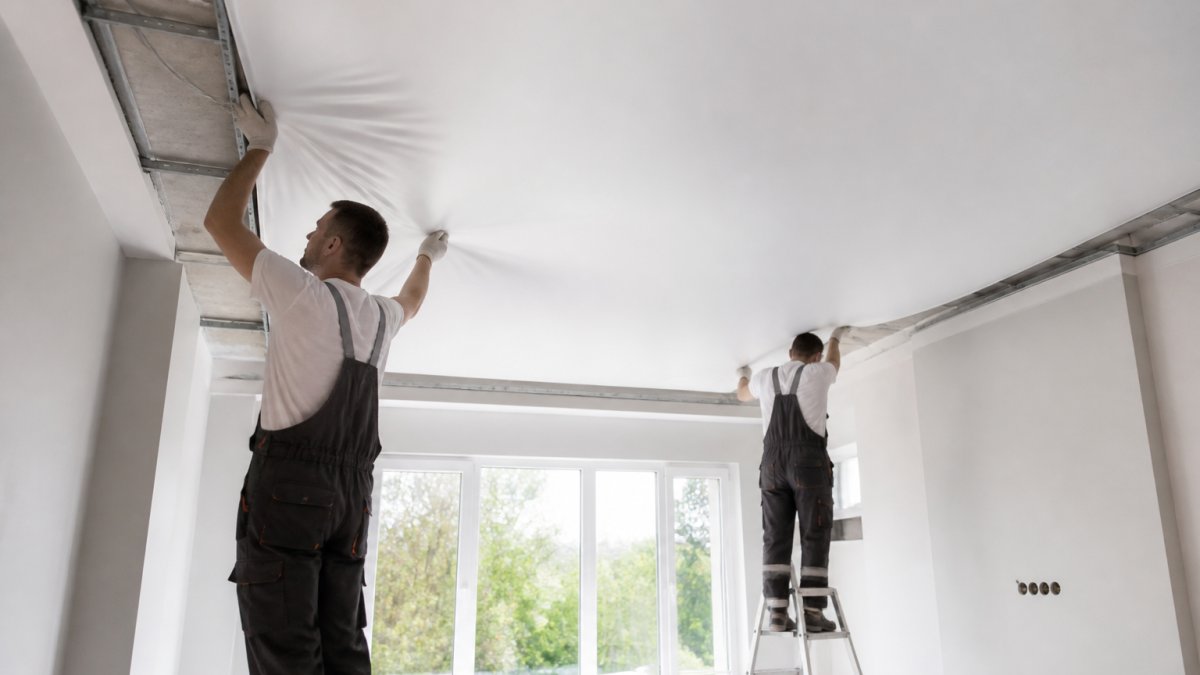
Stretch ceilings are highly customisable at the point of manufacture, with options for matt, glossy, or textured finishes, reducing the need for post-installation painting. You choose your final look before installation happens. The membrane arrives ready to install, no sanding, no priming, no painting required.
This is fundamentally different from traditional ceilings. Plaster ceilings need repainting every few years as they accumulate dust, stains, and damage. Plasterboard ceilings suffer similar wear. Stretch ceilings sidestep this cycle entirely.
A homeowner with a home theatre renovation, documented on home theatre installation forums, reported successful results with a stretched fabric ceiling, avoiding the maintenance issues associated with traditional ceiling finishes. The decision to use a stretch ceiling meant no future repainting was necessary.
The durability comes from the material itself. Stretch membranes resist moisture, mould, and mildew. They don't yellow or fade. Dust wipes away easily. Your ceiling maintains its appearance with only occasional cleaning.
This is why painting contradicts the entire value proposition. You're paying for a low-maintenance solution and then considering a maintenance-heavy modification. It doesn't make sense.
Frequently Asked Questions
Can you paint over a stretch ceiling?
Painting over stretch ceiling material is generally not recommended and often impossible. PVC membranes are pre-finished and resist paint adhesion due to their elastic nature. Fabric stretch ceilings can technically accept paint, but it's considered a last resort. Paint adds weight to fabric systems. Most manufacturers advise against painting entirely, as stretch ceilings are designed to arrive as a finished product requiring no post-installation painting.
What should I do if my stretch ceiling becomes stained or marked?
Clean your stretch ceiling with a soft microfibre cloth and mild soapy water rather than repainting. Stretch ceilings resist mould, mildew, and moisture, and do not discolour over time, so cleaning is usually sufficient to restore appearance. For heavy marking or permanent damage, professional repair or membrane replacement is more effective than painting and avoids the risk of sagging or warranty issues.
Will painting a stretch ceiling affect the warranty?
Yes. Painting a stretch ceiling typically voids the manufacturer's warranty. Most warranties explicitly exclude damage caused by unauthorised modifications, including painting. If you attempt to paint and the membrane sags, peels, or fails, you will be responsible for replacement costs. Always contact your installer or manufacturer before considering any surface treatment.
Can a damaged stretch ceiling be repaired instead of replaced?
Minor damage such as small punctures or stains can sometimes be repaired professionally. However, widespread damage, sagging, or discolouration is usually best addressed through membrane replacement rather than repair. A new membrane installation is cleaner and faster than attempting repairs or repainting, and it restores your warranty protection.
If your ceiling is outdated, cracked, or stained, a stretch ceiling solves the problem permanently. At Stretcharama, we design and install stretch ceilings that eliminate the need for future repainting. Our team handles everything from consultation to installation, transforming your space in days rather than weeks. Request a consultation to see how a stretch ceiling can modernise your home without the mess or ongoing maintenance of traditional options.