 how-to
Is Stretch Ceiling Safe for Asbestos?
Table of Contents
- Understanding Asbestos in Stretch Ceilings
- Artex Ceiling Asbestos Testing: What You Need to Know
- Covering an Asbestos Ceiling with Stretch Ceilings
- Asbestos Ceiling Removal: When and How
- Health Risks and Safety Considerations
- Regulatory Requirements and Professional Standards
- Frequently Asked Questions
Last Updated: October 14, 2026
Understanding Asbestos in Stretch Ceilings
Asbestos in older ceilings poses real health risks. Many homes built before the 1990s contain asbestos in Artex, textured coatings, or insulation materials. The question isn't whether asbestos exists in your ceiling, it's whether a stretch ceiling is safe for asbestos when your installation safely addresses it.
Is stretch ceiling safe for asbestos? Yes, when installed correctly over an asbestos-containing ceiling. Stretch ceilings encapsulate the hazardous material rather than disturbing it. This containment approach prevents fibre release during installation. However, proper assessment and professional installation are essential to ensure safety throughout the process.
We understand homeowners worry about asbestos when renovating. The good news is that stretch ceilings offer a practical solution. They seal old, damaged ceilings without the dust and disruption of traditional removal. This matters because asbestos fibres only become dangerous when disturbed or damaged.
The key principle is simple: encapsulation is safer than disturbance. When you cover an asbestos ceiling with a stretch membrane, you contain the material. No fibres escape into your home. No removal crews needed. No weeks of disruption.
But before any installation, you need clarity on what's actually in your ceiling.
Artex Ceiling Asbestos Testing: What You Need to Know
Testing identifies whether your ceiling actually contains asbestos. Many homeowners assume their Artex is hazardous without confirmation. Testing removes the guesswork and determines your next steps.
When Testing Is Essential
Test your ceiling if it was installed before 1999. Artex products manufactured during this period commonly contained asbestos. If your ceiling shows signs of damage, cracks, peeling, water stains, or deterioration, testing becomes even more important. Damaged asbestos releases fibres more easily.
You should also test if you're planning renovation work. Any disturbance of a potentially asbestos-containing surface requires prior knowledge. Testing costs far less than dealing with contamination later.
How Professional Testing Works
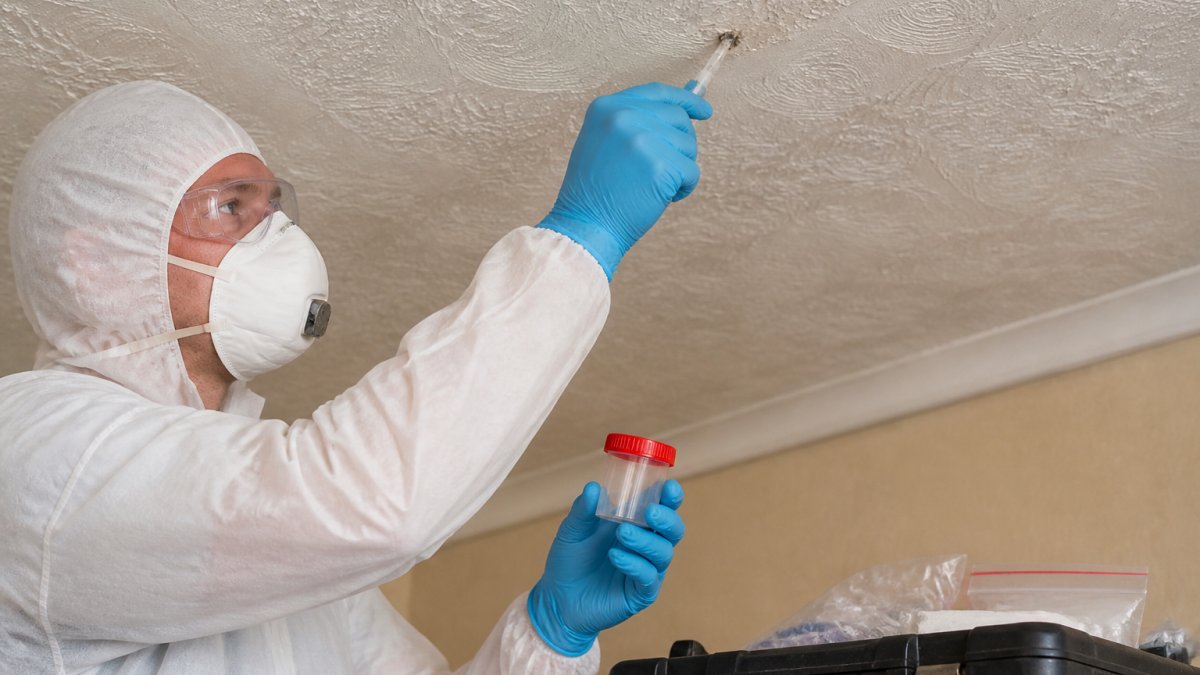
Professional testing follows a straightforward process. A qualified surveyor visits your home and collects small samples from your ceiling. They use specialist equipment to extract samples safely without releasing fibres. These samples go to a laboratory for analysis.
The lab uses polarised light microscopy to identify asbestos fibres. Results come back within 5-10 working days. You receive a detailed report stating whether asbestos is present and in what concentration. This report guides your next decision: encapsulation or removal.
Many surveyors offer asbestos testing as part of a broader ceiling assessment. They evaluate the ceiling's condition, structural integrity, and suitability for stretch installation. This combined approach gives you complete information before committing to work.
Covering an Asbestos Ceiling with Stretch Ceilings
Encapsulation through stretch ceilings is the most practical solution for most homeowners. This method seals the asbestos safely without the expense and disruption of removal.
Why Encapsulation Works
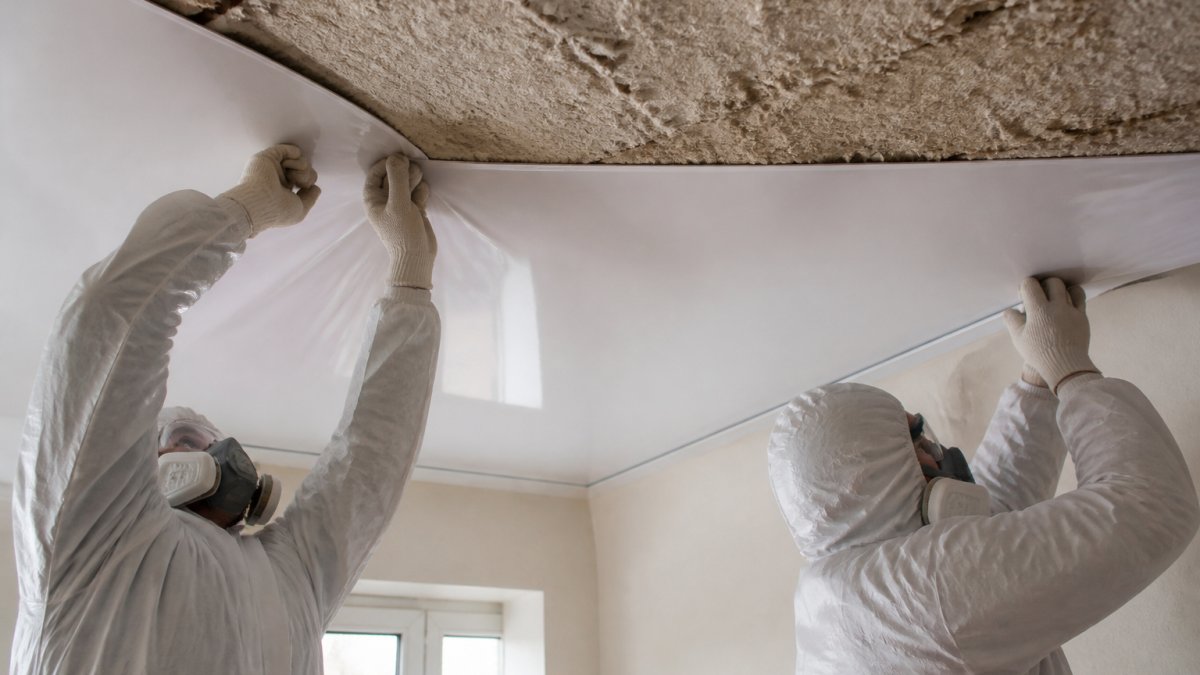
Encapsulation contains hazardous material. The stretch membrane creates an airtight seal over your existing ceiling. No fibres escape. No contamination spreads. The asbestos remains in place, locked beneath the new surface.
This approach suits homeowners with intact but stained or damaged Artex. It works equally well for ceilings showing water damage or age-related deterioration. The stretch ceiling covers everything, the damage, the discolouration, and the hazard.
Encapsulation is faster and cleaner than removal. Traditional removal requires hazmat protocols, specialist contractors, and weeks of disruption. Your home stays dust-free. Your family avoids exposure to removal processes.
Cost-effectiveness matters too. You get a modern, attractive ceiling without the premium price tag of full remediation.
Installation Safety Protocols
Professional installation ensures safety at every step.
First, the ceiling is assessed for stability. If the asbestos ceiling shows severe damage or structural weakness, reinforcement may be needed before stretch installation. The membrane requires a sound substrate.
Second, the installation team works carefully to avoid disturbing the existing ceiling. They install the tracking system, the frame that holds the stretch membrane, without sanding, scraping, or cutting into the asbestos surface. All work happens on the new frame, not the old ceiling.
Third, the membrane is fitted and tensioned. Modern stretch membranes are PVC-based and completely seal the space. Once installed, the asbestos is fully enclosed. No access to the old ceiling. No risk of fibre release.
Finally, ventilation and moisture management are verified. Stretch ceilings work best in well-ventilated spaces. Proper air circulation prevents moisture build-up between the old and new ceilings.
Asbestos Ceiling Removal: When and How
Removal becomes necessary in specific situations. If your asbestos ceiling is severely damaged, removal may be the only safe option. Removal is also required if you plan structural work that would disturb the ceiling.
Removal vs. Encapsulation: Which Is Right for You?
Choose encapsulation if:
- Your ceiling is intact but stained, cracked, or outdated
- You want minimal disruption to your home
- Budget is a primary concern
- The ceiling shows age but no structural damage
Choose removal if:
- Your ceiling is severely damaged or deteriorating
- You plan structural work affecting the ceiling
- You prefer complete elimination of the hazard
- Professional assessment recommends it
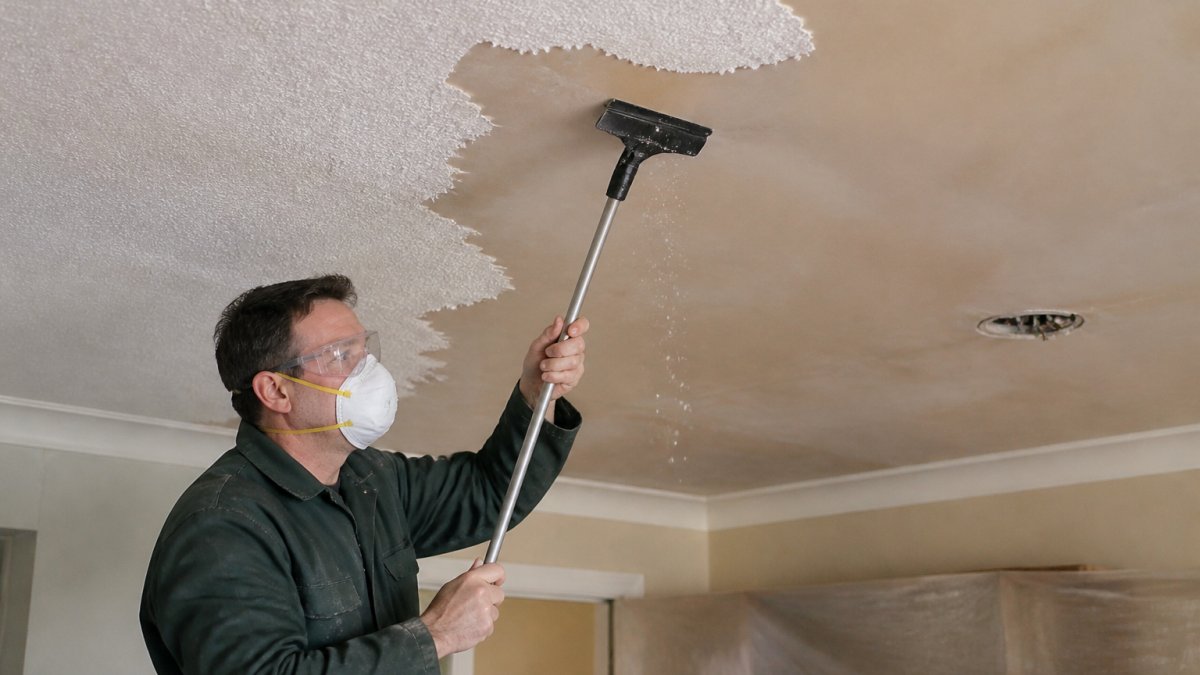
Removal requires licensed asbestos contractors. These specialists follow strict UK regulations for hazardous material handling. They use containment protocols, specialist equipment, and safe disposal methods. The process takes longer and costs more than encapsulation, but it eliminates the material entirely.
If removal is necessary, professional contractors handle everything. They obtain required permits, set up containment barriers, remove the material safely, and dispose of it at licensed facilities. Your role is to hire qualified professionals and stay out of the work area.
Health Risks and Safety Considerations
Asbestos causes serious health problems when fibres are inhaled. The risks include mesothelioma, lung cancer, and asbestosis. These diseases develop over years or decades after exposure. Many people exposed to asbestos show no symptoms for 20-30 years (pubmed.ncbi.nlm.nih.gov).
The key to safety is preventing fibre release. Intact, undisturbed asbestos poses minimal risk. Damaged asbestos or asbestos being removed releases fibres into the air. This is when exposure happens.
Encapsulation prevents exposure by sealing the material. The stretch membrane creates a complete barrier. Fibres cannot escape. Your family breathes clean air. Children and pets are protected.
Professional installation matters because improper work can disturb asbestos. Amateurs or inexperienced installers might damage the ceiling during installation, releasing fibres. Professional teams know how to work safely around hazardous materials.
If you have young children or pets, this becomes even more important. Children are more vulnerable to asbestos exposure. Pets can carry asbestos fibres on their fur. Encapsulation eliminates these risks entirely.
Regulatory Requirements and Professional Standards
The UK enforces strict asbestos regulations. The Control of Asbestos Regulations 2012 governs how asbestos is managed, tested, and removed (Managing and working with asbestos). These rules apply to all buildings containing asbestos.
Building owners have a legal duty to manage asbestos. This means identifying it, assessing the risk, and taking action to prevent exposure. Testing and encapsulation fulfil this duty effectively.
Professional installers must follow building regulations. Any ceiling work must comply with Building Regulations 2010. Stretch ceiling installation meets these standards when performed by qualified contractors. The work is inspected and certified.
Asbestos removal contractors must be licensed. They hold certification from the relevant regulatory bodies. They follow strict protocols for containment, removal, and disposal. Using unlicensed contractors is illegal and dangerous.
When you work with us, you work with professionals who understand these regulations. We ensure all work complies with UK standards. We coordinate with asbestos surveyors and removal specialists when needed. Your installation is safe, legal, and properly documented.
Frequently Asked Questions
Can a stretch ceiling be installed over an asbestos ceiling?
Yes, a stretch ceiling can be installed over an asbestos-containing ceiling, provided the asbestos is in good condition and undisturbed. This encapsulation method is often safer than removal because it seals the asbestos in place, preventing fibres from becoming airborne. However, the ceiling must be assessed by a professional first to confirm its condition and ensure safe installation procedures are followed.
How can I tell whether an Artex ceiling contains asbestos?
Artex ceilings installed before the 1990s are likely to contain asbestos, though appearance alone cannot confirm this. The only reliable way is professional testing: a surveyor collects small samples and sends them to a laboratory for analysis. Visual inspection can identify textured finishes typical of asbestos-era products, but testing is essential before any work begins.
Is it safer to cover or remove an asbestos-containing ceiling?
Encapsulation by covering with a stretch ceiling is often the safer option because it avoids disturbing the asbestos material. Removal creates dust and requires licensed contractors, making it more disruptive and costly. Covering works well if the asbestos is stable and undamaged. Removal is necessary only if the ceiling is deteriorating, damaged, or if renovation plans require it.
Do I need a licensed contractor to deal with asbestos in a ceiling?
For removal, yes, the Health and Safety Executive (HSE) requires licensed contractors to handle asbestos removal work. Always verify credentials before hiring.
Asbestos in your ceiling shouldn't keep you from enjoying a modern, attractive home. Encapsulation through stretch ceiling installation eliminates the hazard while transforming your space. At Stretcharama, we handle the complexity so you don't have to. Our team works with certified asbestos surveyors, manages encapsulation safely, and delivers a flawless finish. Request a consultation with Stretcharama today and discover how we can modernise your ceiling without the mess or risk.