 ultimate-guide
Dust-Free Ceiling Renovation for Homes: A Complete Guide
Table of Contents
- Why Dust-Free Ceiling Renovation Matters for Your Home
- Benefits of Stretch Ceilings vs Plaster
- Stretch Ceiling Installation Process: What to Expect
- How to Cover Damaged Ceilings Without Plastering
- Addressing Common Concerns: Asbestos, Moisture, and Durability
- Cost Comparison: Stretch Ceilings vs Traditional Plastering
- Frequently Asked Questions
Last Updated: September 28, 2026
Why Dust-Free Ceiling Renovation Matters for Your Home
A damaged, stained, or outdated ceiling transforms how an entire room feels. Cracked plaster, water marks, or ageing Artex doesn't just look tired, it signals neglect, even when the rest of your home is immaculate. Yet traditional ceiling renovation has always meant the same thing: weeks of disruption, plaster dust coating every surface, and the kind of mess that lingers long after the work is finished.
This is where dust-free ceiling renovation changes everything. At Stretcharama, we've worked with homeowners who faced the same dilemma: fix the ceiling, or live with it. The problem was never the solution itself, it was the process. Traditional plastering creates unavoidable chaos. Dust penetrates walls, settles on furniture, contaminates heating and ventilation systems, and forces families to relocate temporarily.
A dust-free ceiling renovation solves this entirely. Instead of stripping back to bare plaster and starting over, modern alternatives like stretch ceilings install cleanly over existing surfaces, sealing in problems rather than excavating them. No dust clouds. No weeks of cleanup. No disruption to daily life. For families with young children, pets, or anyone working from home, this difference is transformative.
The real advantage isn't just cleanliness, it's speed. Where traditional plastering takes weeks of drying time between coats, a dust-free ceiling renovation can be completed in a single day. Your ceiling transforms from eyesore to design feature while you're barely inconvenienced.
Benefits of Stretch Ceilings vs Plaster
Comparing stretch ceilings to traditional plastering reveals why an increasing number of homeowners are choosing the dust-free alternative. The two approaches solve the same problem in fundamentally different ways.
Traditional plastering requires removing old material, preparing the substrate, applying multiple coats, waiting for drying time between applications, and finally painting. This process generates significant dust, requires extended drying periods, and demands skilled application to achieve a smooth finish. The work is messy by design, there's no way around it.
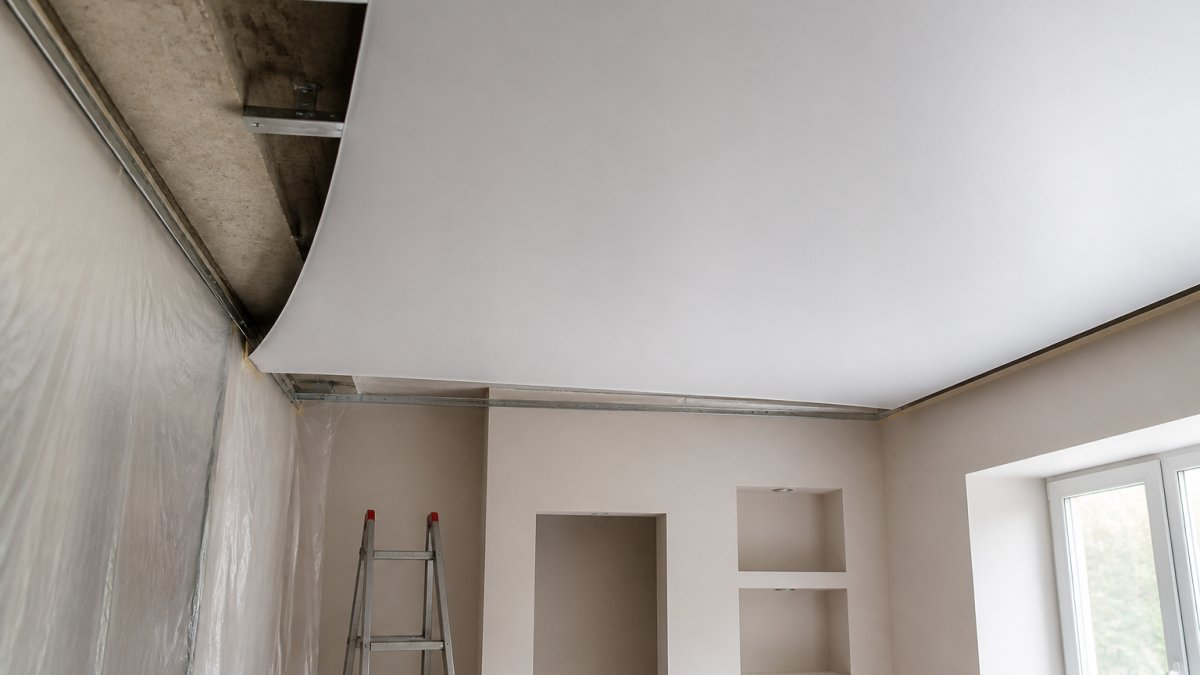
Stretch ceilings work differently. A frame is installed around the room's perimeter, and a specially manufactured membrane is stretched across it and heated to create tension. The material adheres without adhesive, sits slightly below the original ceiling, and requires no drying time whatsoever. Installation happens in hours, not weeks.
The practical benefits stack up quickly:
- No dust or debris: The stretch ceiling material is installed intact, meaning no sanding, no plaster clouds, no cleanup extending for weeks
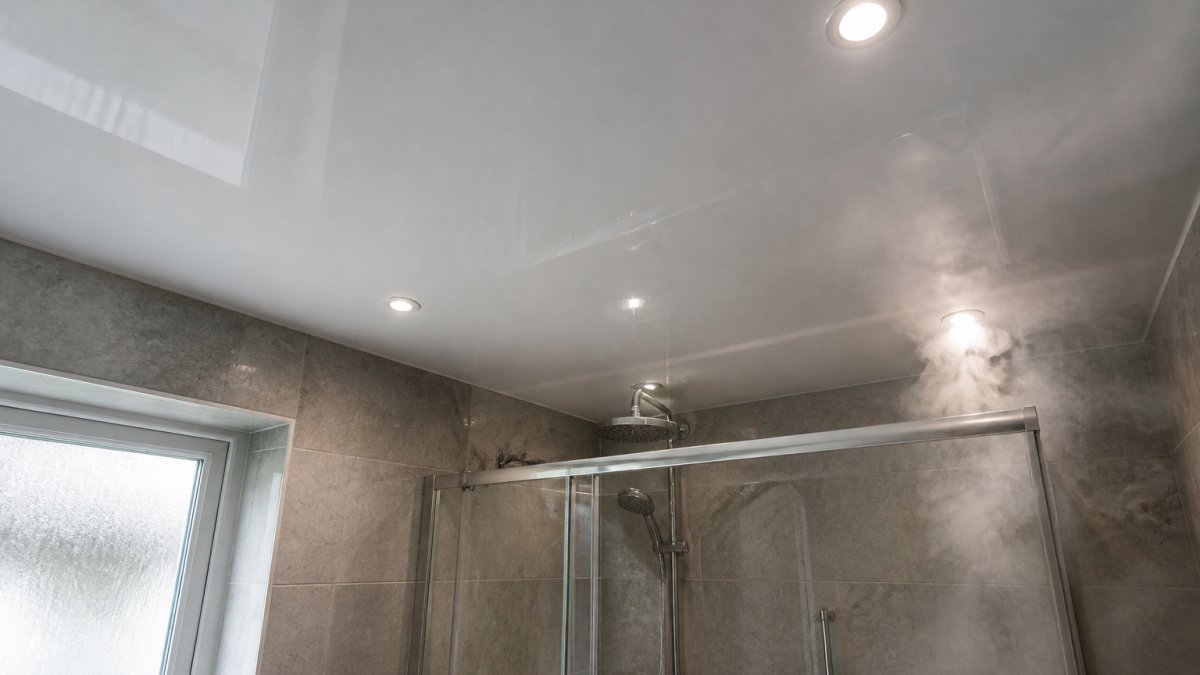
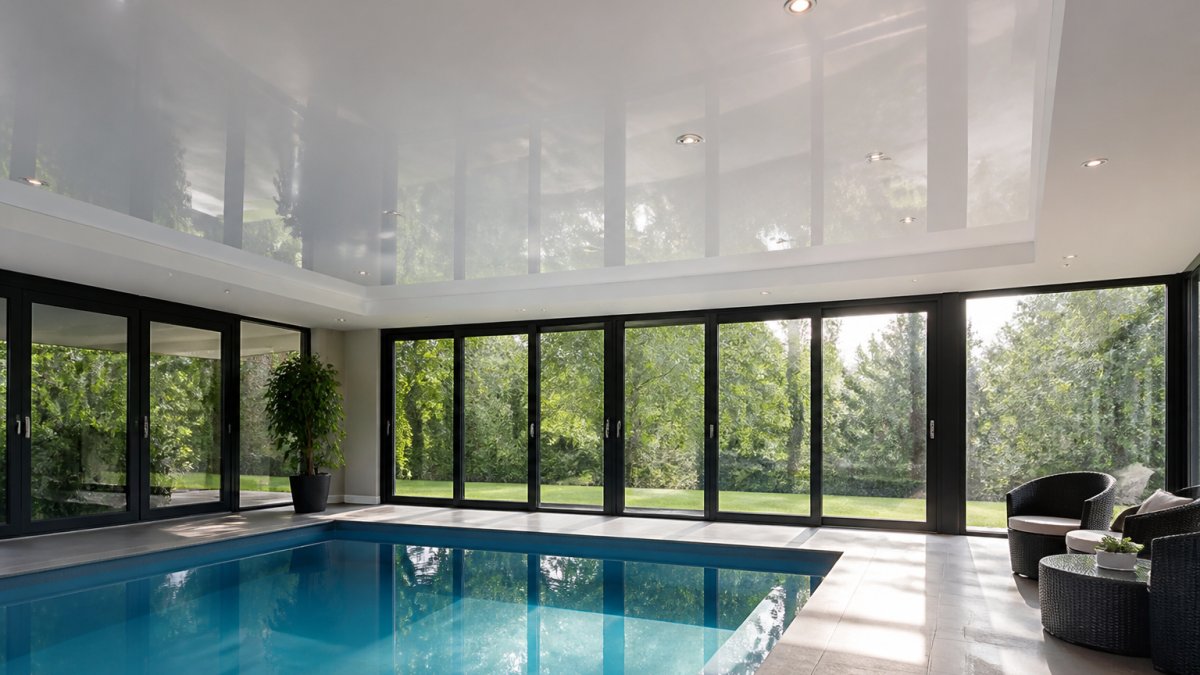
- Moisture resistance: Stretch ceilings perform exceptionally well in humid environments, making them ideal for bathrooms, kitchens, and indoor pool rooms where traditional plaster struggles
- Durability without maintenance: Plaster cracks, stains, and deteriorates. Stretch ceilings resist staining, don't crack, and maintain their appearance with minimal care
- Design flexibility: Stretch ceilings come in matt, satin, and gloss finishes, plus a range of colours. Plaster is limited to painted surfaces
- Covers problems permanently: Old Artex, water damage, stains, and cracks disappear beneath the membrane. No need to address underlying issues before installation
For homeowners with pets or young children, the cleanliness advantage alone justifies the choice. For those in humid climates or with moisture-prone rooms, the durability difference is even more compelling.
Stretch Ceiling Installation Process: What to Expect
Understanding what happens during a dust-free ceiling renovation removes anxiety about the process. Most homeowners worry about disruption, mess, and how long they'll be without a usable room. The reality is far less dramatic.
Pre-Installation Preparation
Before any work begins, the space needs minimal preparation. Unlike plaster work, you don't need to strip walls, remove furniture entirely, or seal off the room for weeks. A site survey establishes the exact dimensions, identifies any obstacles like light fittings or air vents, and determines whether the existing ceiling can support the frame installation.
Most homeowners can remain in the property during installation. Rooms don't need to be emptied, just cleared enough to allow access around the perimeter. If you have valuable items in the space, moving them is sensible, but it's not a requirement. The installation creates no dust to settle on surfaces or penetrate soft furnishings.
The frame installation happens first. An aluminium track is secured to the walls around the room's perimeter. This track is what holds the stretch ceiling membrane in place. Installation takes a few hours, and the track sits flush against the wall, there's no protruding edge or visible hardware once the membrane is installed.
Installation Day Timeline
The actual installation of your dust-free ceiling renovation for homes typically happens in a single day. Most residential rooms take 4-8 hours depending on size and complexity.
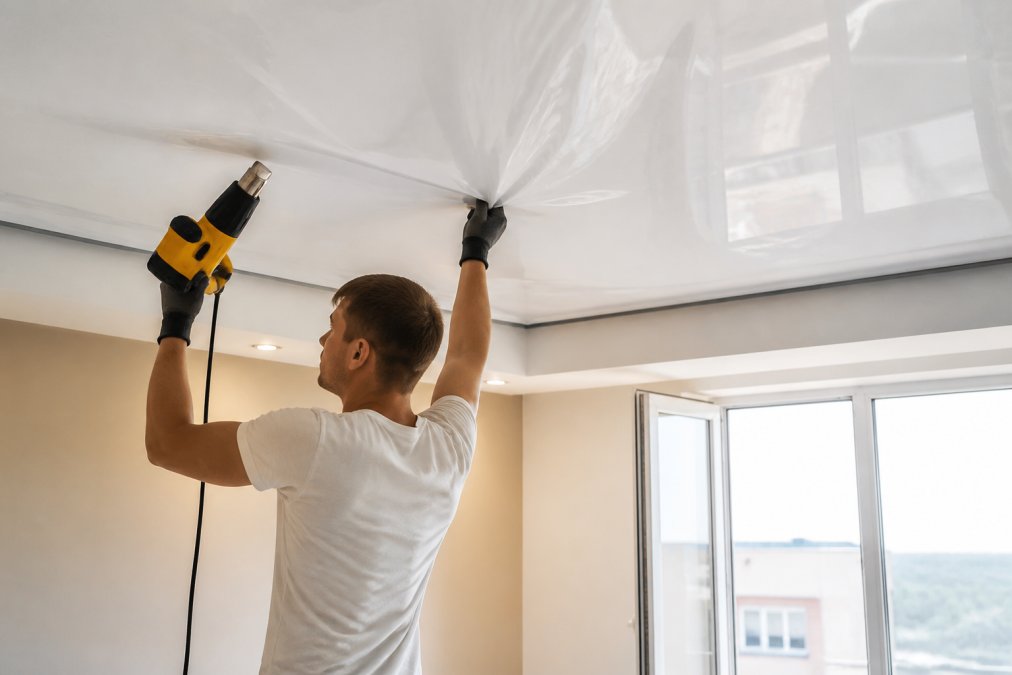
The process follows a straightforward sequence. Once the perimeter frame is in place, the membrane is carefully positioned and clipped into the track. A heat gun is used to warm the material gently, creating tension that pulls it smooth and flat. This heating process is what allows the membrane to stretch without wrinkles or sags, it's the technical heart of the installation, but from a homeowner's perspective, it's simply a technician moving around the room with a heat source.
As the membrane is heated and tensioned, any imperfections in the surface below, cracks, stains, water damage, old Artex, disappear beneath it. The final result is a perfectly smooth, unblemished ceiling with no visible seams or joints.
Most installations are completed in a single working day. You can use the room immediately once the work is finished. There's no drying time, no fumes, no cleanup extending for weeks.
Post-Installation Care
One of the genuine advantages of a dust-free ceiling renovation is how little maintenance is required afterward. Stretch ceilings are remarkably low-maintenance compared to plaster.
Routine care involves occasional dusting with a soft cloth or gentle vacuuming with an upholstery attachment. The material resists staining, so spills or marks are easily wiped away with a damp cloth. For kitchens or bathrooms where grease or moisture might accumulate, a mild detergent solution works effectively without damaging the membrane.
Avoid sharp objects, abrasive cleaners, and excessive moisture. The material is durable, but it's not indestructible, treat it as you would any quality interior finish. In normal domestic conditions, a stretch ceiling will maintain its appearance without requiring refinishing, repainting, or major repairs.
How to Cover Damaged Ceilings Without Plastering
If your ceiling shows signs of damage, cracks, water stains, peeling paint, or deteriorating Artex, you have options beyond traditional plastering. A dust-free ceiling renovation addresses all these problems without the mess and disruption of conventional repairs.
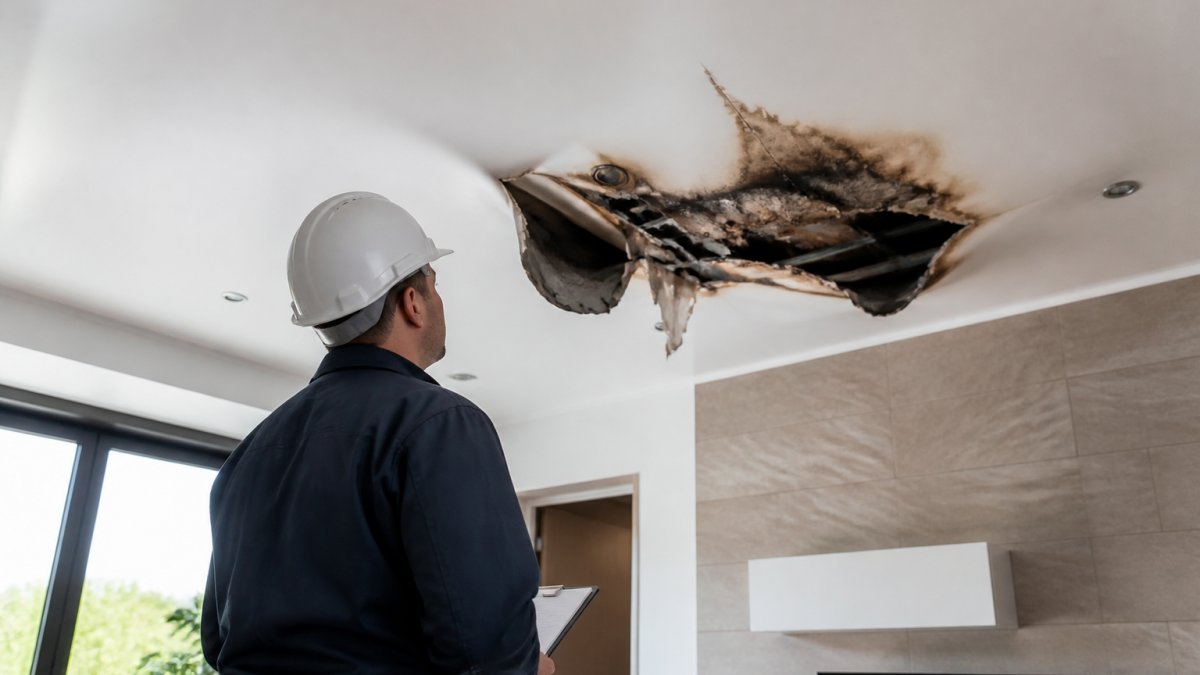
Water damage is particularly common in older properties. Stains from previous leaks, damp patches, or discolouration from years of moisture exposure make ceilings look neglected even when the underlying problem has been fixed. Plastering requires identifying and treating the moisture source, waiting for everything to dry, then applying multiple coats. A stretch ceiling simply covers the damage entirely, sealing it away and preventing any future moisture from affecting the new surface.
Artex ceilings from the 1980s and 1990s present a different challenge. Many homeowners worry about asbestos content, which is a legitimate concern with older Artex (Diagrams showing where asbestos can occur in buildings).
Addressing Common Concerns: Asbestos, Moisture, and Durability
Homeowners considering a dust-free ceiling renovation often have legitimate safety and durability questions. Understanding these concerns directly addresses why stretch ceilings have become the preferred choice for many.
Cost Comparison: Stretch Ceilings vs Traditional Plastering
Understanding the true cost of each approach requires looking beyond the initial installation price. A dust-free ceiling renovation involves different expenses than traditional plastering, and the long-term picture differs significantly.
| Factor | Stretch Ceiling | Traditional Plaster |
|---|---|---|
| Installation time | 1 day | 2-4 weeks |
| Dust and mess | None | Extensive |
| Drying time required | None | 2-4 weeks between coats |
| Maintenance | Minimal (occasional dusting) | Regular painting and repairs |
| Lifespan | Durable | Requires maintenance and eventual replacement |
| Moisture resistance | Excellent | Poor |
| Repair costs | Minimal | Frequent patching and repainting |
| Disruption to home life | Minimal | Significant |
Frequently Asked Questions
Is it possible to renovate a ceiling without creating dust?
Yes. Dust-free ceiling renovation is entirely possible with stretch ceiling systems. Unlike traditional plastering, which generates significant plaster dust, stretch ceilings are installed by securing a membrane to the room's perimeter using a heat gun. No demolition, sanding, or plaster removal occurs, so dust production is eliminated. This makes the process ideal for homes with children, pets, or those sensitive to airborne particles.
How long does a dust-free ceiling installation typically take?
Most dust-free ceiling installations are completed in a single day, typically between 4-8 hours depending on room size and complexity. This minimal disruption is one of the key advantages over traditional plastering, which can take weeks of drying time and multiple visits. You can resume normal use of the room immediately after installation, with no waiting periods or ongoing mess.
Will a stretch ceiling cover my old Artex ceiling safely?
Stretch ceilings can be installed over Artex without removal. Many Artex products installed before the 1990s contain asbestos. If you're uncertain whether your ceiling contains asbestos, installation of a stretch ceiling over it is a sensible, safe solution that doesn't require testing or remediation first, as it safely encapsulates any potential hazard beneath the new membrane.
Are stretch ceilings durable enough for moisture-prone areas like bathrooms and pool rooms?
Yes, stretch ceilings are specifically designed for high-moisture environments. The material is moisture-resistant and will not absorb water, making it ideal for bathrooms, kitchens, and indoor swimming pools. Unlike traditional plaster, which can crack, stain, or develop mould in damp conditions, stretch ceilings maintain their appearance and structural integrity. They're also easy to clean and won't harbour condensation problems common with standard ceilings.