 how-to
Cover Artex Ceilings Without Plastering: 5 Methods
Table of Contents
- Why Cover Artex Ceilings Without Plastering
- Artex Ceiling Asbestos Safety: What You Need to Know First
- Method 1: Stretch Ceiling Over Artex
- Method 2: Ceiling Panels Over Artex
- Method 3: Painting Over an Artex Ceiling
- Method 4: Cladding and Battening Systems
- Method 5: Drywall Overlay
- Comparing the Methods: Which Suits Your Home
- Frequently Asked Questions
Last Updated: October 5, 2026
Why Cover Artex Ceilings Without Plastering
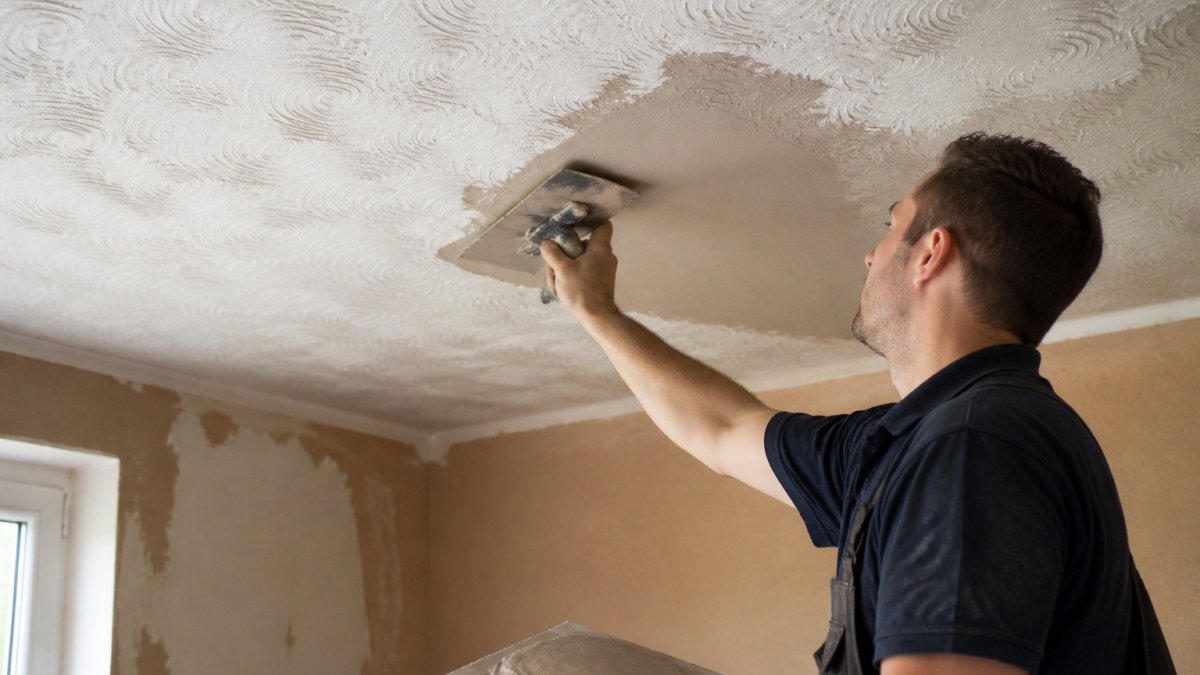
Artex ceilings are a common sight in homes built from the 1970s through the 1990s. They look dated, trap dust, and can develop stains or cracks over time. Many homeowners assume that covering artex ceilings requires full replastering, a messy, disruptive process that takes weeks and leaves plaster dust throughout your home.
The truth is simpler. You can cover artex ceilings without plastering using several proven methods. Each approach offers different benefits depending on your budget, timeline, and the condition of your ceiling. Some methods take just a few days. Others create zero dust. A few work brilliantly in moisture-prone spaces like bathrooms and pool rooms.
Below, we'll walk through five practical options so you can choose the right approach for your home.
Artex Ceiling Asbestos Safety: What You Need to Know First
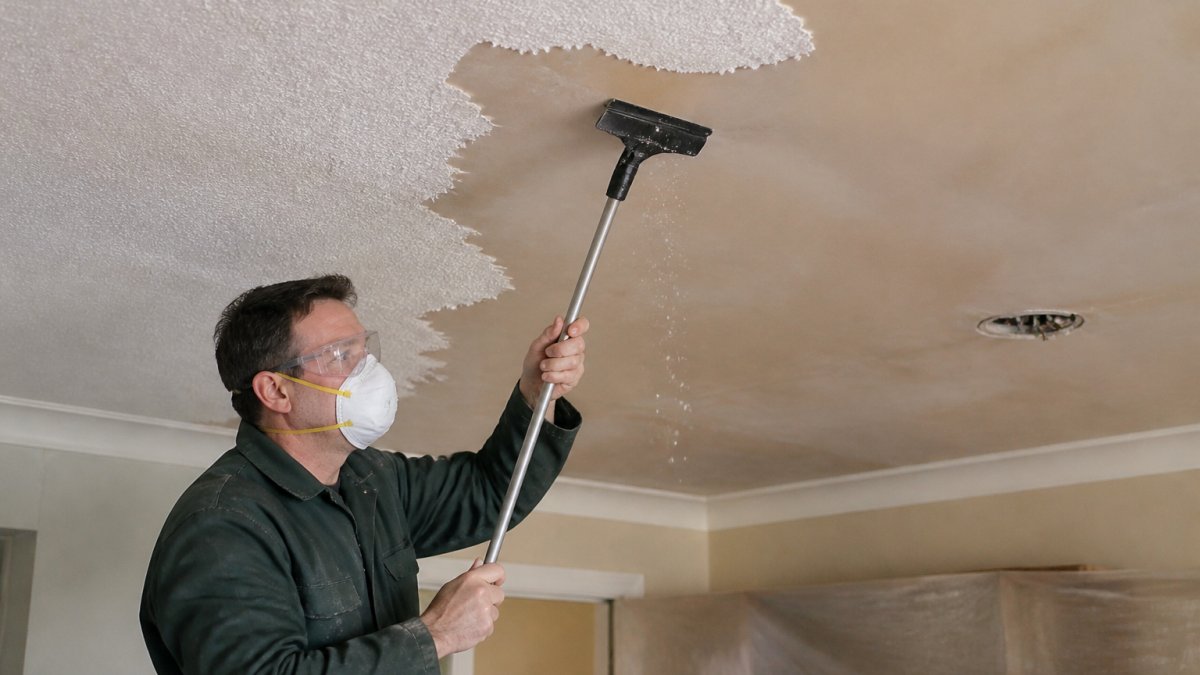
Before you cover anything, check whether your Artex contains asbestos. Artex products manufactured before 2000 may contain asbestos fibres. This is a health risk if the material is disturbed, sanded, or broken during removal.
How to check for asbestos:
- Visual inspection alone is not reliable. Asbestos looks identical to safe Artex.
- Contact the Health and Safety Executive (HSE) for guidance on testing.
- Hire a licensed surveyor to take samples and have them tested at an accredited laboratory.
If asbestos is present:
- Do not sand, scrape, or disturb the ceiling.
- Do not attempt DIY removal.
- Hire a licensed asbestos removal contractor.
- Many covering methods (stretch ceilings, panels, battening systems) work perfectly over asbestos Artex without disturbing it.
If asbestos is absent:
- You have more flexibility with your covering method.
- Some methods still require minimal preparation.
- Others may involve light surface work.
The good news: covering methods avoid the asbestos problem entirely. You seal the material in place rather than removing it, which is safer and cheaper than traditional asbestos abatement.
Method 1: Stretch Ceiling Over Artex
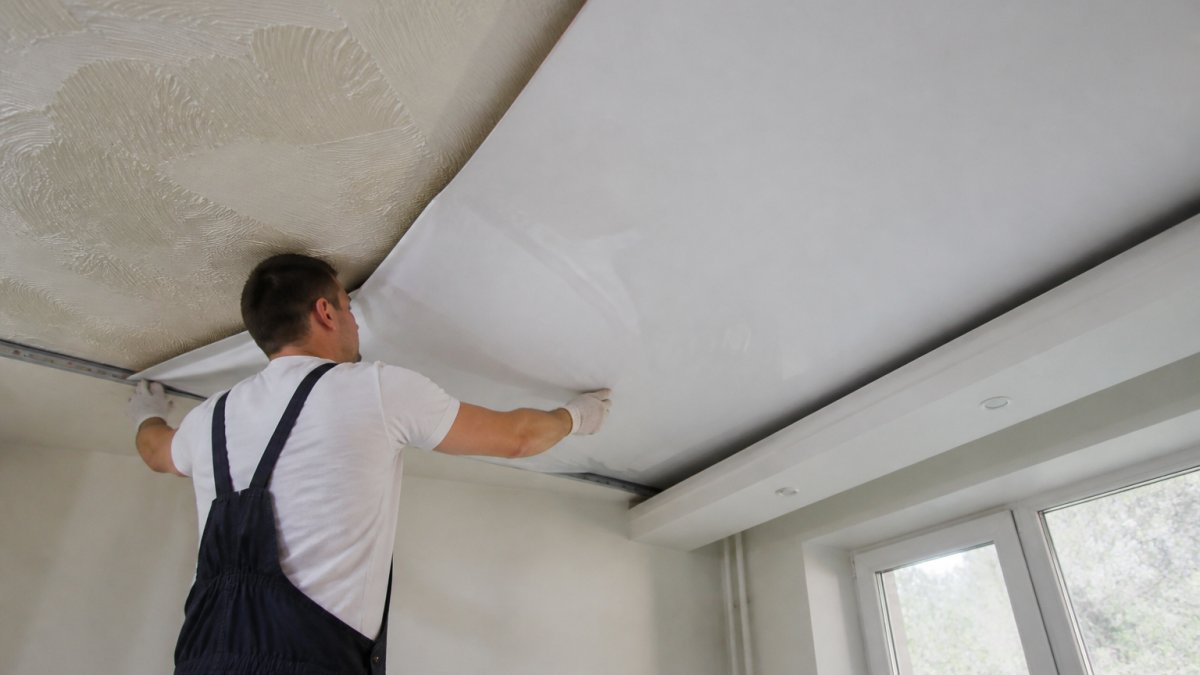
A stretch ceiling is a fabric membrane installed just below your existing ceiling. It covers the Artex completely and creates a flawless, modern finish.
How it works:
- A frame is fitted around the perimeter of the room.
- A custom-cut fabric panel is heated and stretched into place.
- The fabric is sealed into the frame, creating a smooth, seamless surface.
Advantages:
- Creates a perfectly smooth, modern finish
- Takes 1-2 days per room
- Zero dust during installation
- Works over asbestos Artex without disturbing it
- Moisture-resistant options available for bathrooms and pool rooms
- Can hide pipes, wiring, and other ceiling fixtures
Disadvantages:
- Higher upfront cost than some alternatives
- Requires professional installation
- Not a DIY option
- Limited colour options compared to paint
Best for:
- Homeowners wanting a premium, seamless finish
- Rooms with moisture issues (bathrooms, kitchens, pool rooms)
- People who value speed and minimal disruption
- Those with asbestos Artex who want a safe, non-invasive solution
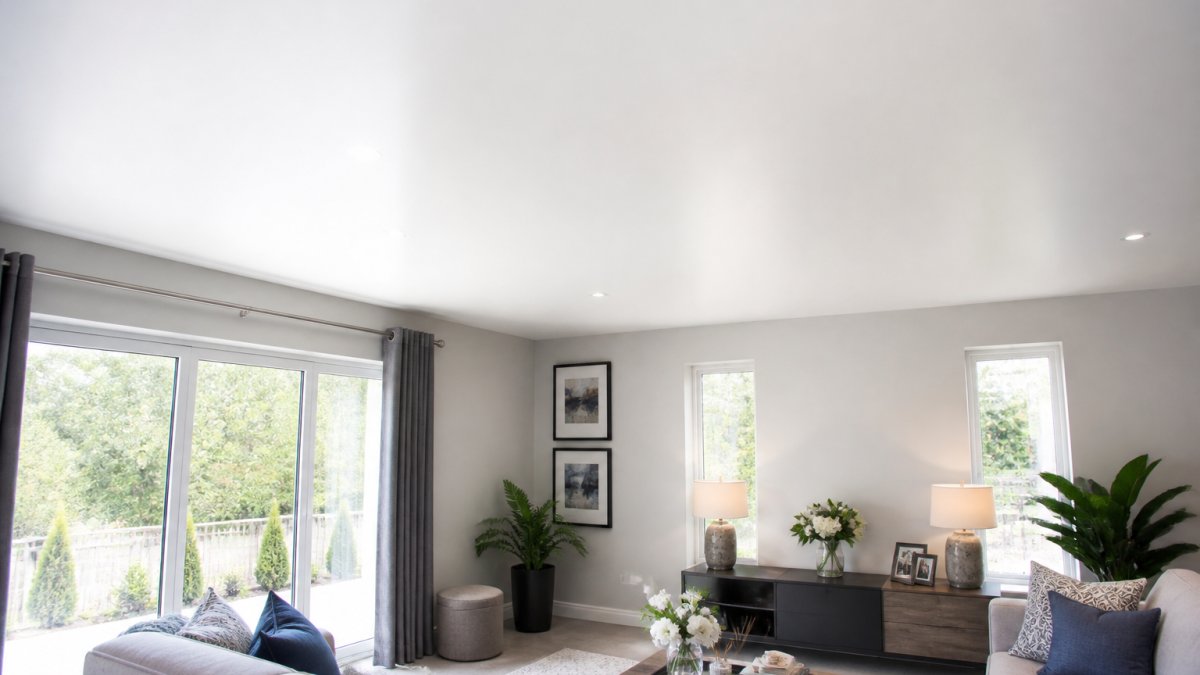
Stretch ceilings have become increasingly popular because they solve multiple problems at once. They modernise the room, hide imperfections, resist moisture, and require no mess. Stretcharama specialises in this method. The fabric is available in matt or gloss finishes, and some options include acoustic properties for sound dampening.
Method 2: Ceiling Panels Over Artex
Drop ceiling panels (also called suspended ceilings) create a grid framework with removable tiles or panels that sit just below your Artex.
How it works:
- Metal tracks are fitted around the room perimeter.
- A grid of support beams is suspended from the existing ceiling.
- Lightweight panels are laid into the grid.
- The system creates an accessible cavity for maintenance and utilities.
Advantages:
- Affordable and widely available
- Easy to access utilities (pipes, wiring, ducting)
- Panels are replaceable if damaged
- Can incorporate lighting and ventilation
- Works over asbestos without disturbance
- DIY-friendly (basic carpentry skills needed)
Disadvantages:
- Lowers ceiling height (typically 100-150mm drop)
- Can look institutional or dated if cheap panels are used
- Requires regular maintenance (dust accumulation)
- Not ideal for rooms with low ceilings
- Panels can sag or warp in very humid environments
Best for:
- Basements and utility spaces
- Budget-conscious homeowners
- Rooms where you need access to ceiling cavities
- DIY enthusiasts with basic carpentry skills
The grid framework can accommodate recessed lighting, which improves the overall appearance. Higher-quality panels (mineral fibre or acoustic options) look more residential than basic polystyrene tiles.
Method 3: Painting Over an Artex Ceiling
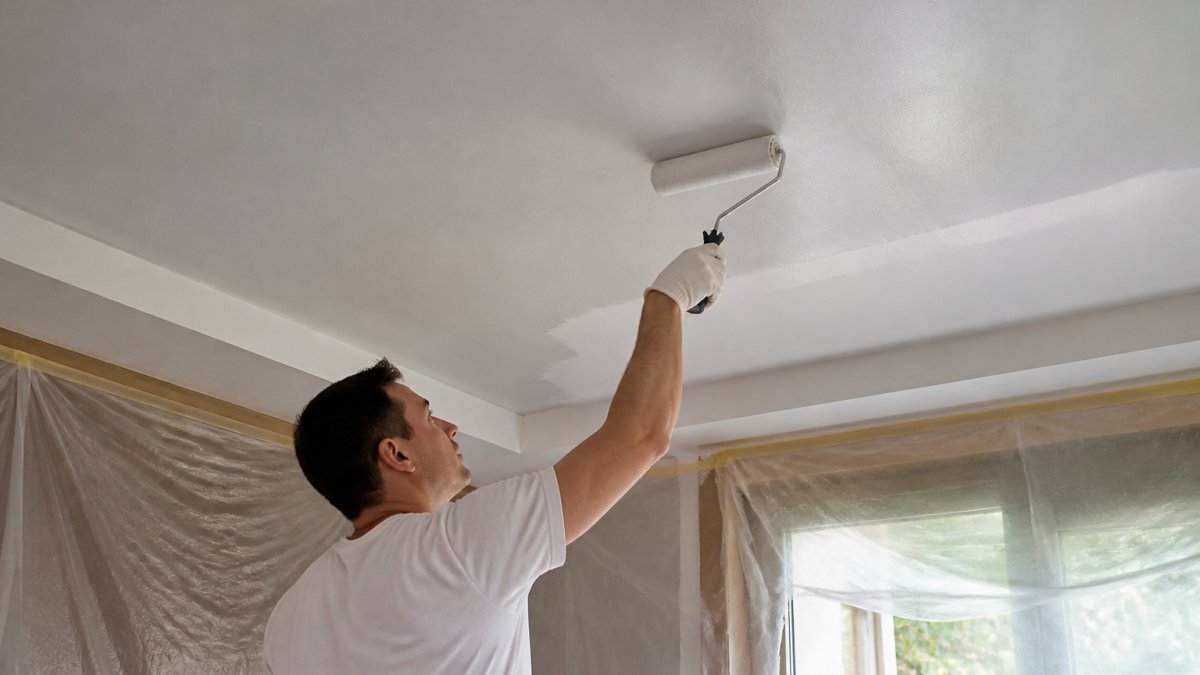
If your Artex is in reasonable condition and you want the simplest option, painting can work. You paint directly over the existing texture without removing or covering it.
How it works:
- Clean the Artex to remove dust and loose material.
- Fill any large cracks or holes with flexible filler.
- Prime with a bonding primer designed for textured surfaces.
- Apply two coats of ceiling paint (usually matt emulsion).
Advantages:
- Lowest cost option
- Quickest to complete (1-2 days)
- Minimal disruption
- Refreshes the appearance dramatically
- Works over asbestos without disturbance
Disadvantages:
- Does not hide stains or deep cracks
- Paint can flake if the Artex is loose or damaged
- Doesn't modernise the look as much as other methods
- Texture remains visible and can still trap dust
- May require repainting every 5-7 years
- Not suitable for textured Artex with deep relief
Best for:
- Tight budgets
- Artex in good structural condition
- Homeowners who want a quick refresh
- Rooms where lowering the ceiling is not an option
Choose a high-quality matt ceiling paint. It hides imperfections better than gloss and is easier to touch up later. Avoid high-sheen finishes, which highlight every imperfection.
Method 4: Cladding and Battening Systems
Battens (wooden or metal strips) are fixed to the Artex ceiling, and then plasterboard or cladding panels are attached to the battens. This creates a new, smooth surface.
How it works:
- Battens are screwed directly to the existing ceiling.
- Plasterboard sheets are fixed to the battens.
- Joints are taped and finished with joint compound.
- The surface is sanded and painted.
Advantages:
- Creates a completely new, smooth ceiling
- Works over asbestos Artex without removal
- More affordable than stretch ceilings
- Allows for custom finishes (textured or smooth)
- Durable and long-lasting
Disadvantages:
- Requires carpentry skills or professional installation
- Lowers ceiling height (typically 50-100mm)
- Joint finishing creates some dust
- Heavier than panels, requires secure fixing
- Takes longer than painting or panels (3-5 days)
Best for:
- Homeowners wanting a solid, permanent solution
- Rooms with adequate ceiling height
- Those comfortable with a modest dust level during finishing
- Budget-conscious buyers seeking durability
The battens must be spaced correctly (typically 400mm apart) to prevent sagging. Plasterboard joints must be properly taped and finished for a seamless appearance. This method gives you complete control over the final look.
Method 5: Drywall Overlay
A drywall overlay involves gluing thin plasterboard directly to the Artex surface (or to battens) without traditional joint finishing. It's a hybrid between painting and full replastering.
How it works:
- The Artex is cleaned and primed.
- Thin plasterboard sheets are adhered using specialist adhesive.
- Joints are sealed with tape and a thin skim coat.
- The surface is painted.
Advantages:
- Creates a smooth, modern finish
- Less invasive than full battening
- Works over asbestos Artex
- Faster than traditional plastering
- More durable than paint alone
Disadvantages:
- Requires specialist adhesive and application skill
- Modest dust during joint finishing
- Can be more expensive than painting but less than stretch ceilings
- Not suitable for ceilings with significant movement or cracks
- Lowers ceiling height slightly
Best for:
- Homeowners seeking a middle ground between paint and full renovation
- Artex ceilings in fair condition with minor cracks
- Those wanting a smooth finish without major construction work
Comparing the Methods: Which Suits Your Home
| Method | Speed | Cost | Dust | Moisture-Resistant | Best For |
|---|---|---|---|---|---|
| Stretch Ceiling | 1-2 days | Higher | None | Excellent | Premium finish, bathrooms, pools |
| Ceiling Panels | 2-3 days | Low | Minimal | Moderate | Basements, utility spaces, DIY |
| Painting | 1-2 days | Very Low | Minimal | Poor | Quick refresh, tight budgets |
| Battening & Plasterboard | 3-5 days | Moderate | Some | Good | Solid, permanent solution |
| Drywall Overlay | 2-3 days | Moderate | Minimal | Moderate | Smooth finish, fair condition Artex |
Choose stretch ceiling if:
- You want the highest-quality finish
- Your room has moisture problems (bathroom, kitchen, pool room)
- You value speed and zero disruption
- Budget allows for a premium solution
Choose ceiling panels if:
- You need to access utilities regularly
- Your budget is tight
- You're comfortable with a modest lowering of ceiling height
- You prefer a DIY approach
Choose painting if:
- Your Artex is in good condition
- Your budget is minimal
- You want the fastest option
- You don't mind the textured appearance remaining
Choose battening and plasterboard if:
- You want a permanent, smooth ceiling
- You have adequate ceiling height
- You're willing to accept some dust during finishing
- You want good durability at moderate cost
Choose drywall overlay if:
- You want a smooth finish without major construction
- Your Artex has minor damage only
- You want a middle-ground cost and disruption level
Covering artex ceilings without plastering gives you real options. Whether you choose the speed and elegance of a stretch ceiling, the affordability of panels, or the simplicity of paint, you can transform your ceiling without the mess and disruption of traditional plastering.
Stretcharama specialises in stretch ceiling installations across residential properties. We handle the entire process from survey to installation, leaving your home dust-free and your ceiling flawless. If you're considering covering artex ceilings in a moisture-prone room or want a premium, long-lasting finish, a stretch ceiling may be the right choice. Request a consultation to discuss your specific needs and explore whether this method suits your home.
Frequently Asked Questions
Can you cover an Artex ceiling without plastering?
Yes. Stretch ceilings, ceiling panels, specialist paint, battening systems, and drywall overlays all cover Artex without removing or plastering over it. Each method has different costs, timescales, and suitability depending on your room type and budget. Stretch ceilings and panels are the most popular mess-free options for homeowners.
Is it safe to cover an old Artex ceiling?
Covering is safe if the Artex is in sound condition and firmly adhered. However, Artex made before 2000 may contain asbestos. Before covering, have it tested by an accredited laboratory if you're unsure of its age or composition. If asbestos is present, you can still cover it, but the covering material must be suitable for asbestos substrates. Professional installers handle this safely.
What is the easiest way to cover an Artex ceiling?
Stretch ceilings are the quickest and least disruptive. Installation typically takes one to two days with minimal mess or dust. Ceiling panels are also straightforward if your ceiling height allows. Painting is the cheapest option but requires surface preparation and won't hide severe damage or stains as effectively.
How do you know if Artex contains asbestos?
Visual inspection alone cannot confirm asbestos. If your Artex was applied before 2000, asbestos testing is advisable. Contact an accredited asbestos surveyor or testing laboratory. They'll take a small sample and analyse it. This is essential before any renovation work begins.