 listicle
9 Best Colour Palettes for Indoor Swimming Pool Ceilings
Last Updated: November 1, 2026
Quick Summary
The best colour palettes for indoor pool ceilings are cool blue and blue-grey, warm white, sage and olive green, warm sand and taupe, and charcoal or deep navy. Each one changes how the water looks, because the ceiling reflects light back onto the pool. Test large samples in the room before deciding, since pool ceilings look different at a shallow angle.
- A low ceiling shifts the water's colour more than a high one.
- Satin is the practical default finish, since it wipes clean and resists condensation marking.
- Test a large sample at midday and again in the evening under your planned lighting.
- Choose a finish rated for humid, chlorinated interiors, not one sold for bathrooms.
- A pale blue ceiling changes the water's look more cheaply than replacing the pool finish.
Table of Contents
- Why Ceiling Colour Changes the Look of Your Pool Water
- Cool Blue Palettes That Reflect the Water
- Vibrant Green and Natural Wood Palettes
- Neutral and Metallic Finishes: Matte, Satin and Gloss Compared
- Lighting Design: How Light Changes Your Chosen Palette
- Stretch Ceilings for Swimming Pools: Palette and Material Choices
- Choose Your Pool Ceiling Palette and Request a Consultation
- Frequently Asked Questions
Choosing a colour for your pool ceilings is harder than it looks, because the ceiling changes how the water appears.
Most people start with the tiles and the water, then pick a ceiling colour almost as an afterthought. That order often leads to disappointing results. The ceiling is a large surface above the water, and it reflects light onto everything below it.
Why Ceiling Colour Changes the Look of Your Pool Water
The ceiling is the largest reflector in an indoor pool room, and the water is the largest mirror. Light travels up from the pool, hits the ceiling, bounces back down and mixes with the light already reaching the water.
The mechanism is straightforward. A surface reflects the wavelengths it does not absorb. A pale, near-white ceiling reflects most of the visible spectrum, adding neutral light so the water reads lighter, clearer and slightly cooler.
What each palette family does to the water
- Warm white and off-white ceilings add neutral light. Water looks clearer and slightly paler, and blue tiles read truer. This is the safest pairing when the tile is the feature.
- Cool blue and blue-grey ceilings reinforce blue tiles and push the water towards a deeper, more uniform blue. Over turquoise tiles the effect can tip towards green, so test before committing.
- Sage and olive green ceilings pull the water towards green and soften the room. Over blue tiles the result can look murky rather than natural, so pair green ceilings with stone, timber or green-toned tiles.
- Warm sand, taupe and clay ceilings neutralise a blue pool and make the water look warmer and less clinical. Useful in spa rooms and traditional interiors where a bright blue pool would feel out of place.
The variables that decide how strong the effect is
Three things control how much the ceiling colour actually shifts the water:
- Ceiling height. A low ceiling is closer to the water and occupies more of the swimmer's field of view, so its colour dominates. A high ceiling has less influence and the water reads closer to its true tile colour.
- Ceiling area relative to openings. A fully enclosed ceiling reflects more colour back into the pool than one broken up by rooflights, clerestory glazing or a large opening. Daylight from above dilutes the ceiling's contribution.
- Water surface conditions. Still water acts as a near-perfect mirror and shows the ceiling clearly. Moving water, aerated by jets or a swim spa, scatters light and washes the reflected colour out, so the ceiling's effect will be weaker than a still-water test suggests.
A simple way to predict the result
Before ordering any finish, hold a large painted board or a sample of the proposed membrane at roughly the angle it will sit above the water, and view the pool from the far end of the room. Compare it against a plain white board in the same position, the difference is the effect you are buying. Do this at midday and again in the evening, because the shift is often stronger under warm lamps than under daylight.
The table below sets out how each palette family affects the look of the water, as described above.
| Palette family | Effect on the water | Best pairing |
|---|---|---|
| Warm white and off-white | Clearer, slightly paler water | Blue tiles, when the tile is the feature |
| Cool blue and blue-grey | Deeper, more uniform blue | Blue tiles; test before turquoise |
| Sage and olive green | Pulled towards green, softer room | Stone, timber or green-toned tiles |
| Warm sand, taupe and clay | Warmer, less clinical water | Spa rooms and traditional interiors |
| Charcoal and deep navy | Darker, jewel-like water, higher contrast | Lap pools and contemporary rooms |
| Metallic and pearlescent | Livelier surface, busier look | Feature bay rather than whole ceiling |
Cool Blue Palettes That Reflect the Water
Cool blues are the most common starting point, and for good reason. A soft blue or blue-grey ceiling echoes the water without competing with it.
Keep the blue slightly muted. A very saturated ceiling can feel dominant and may make the room look smaller; a softer tone usually works better over a long period because it does not feel dated as quickly.
Vibrant Green and Natural Wood Palettes
Green and wood palettes bring warmth and a natural feel to a pool room. Sage and olive greens soften the room and pair well with stone, timber and planting.
These palettes need more care in planning. Green can shift noticeably under artificial light, and wood tones can look heavy if the room lacks daylight, so check each option in your own lighting before deciding.
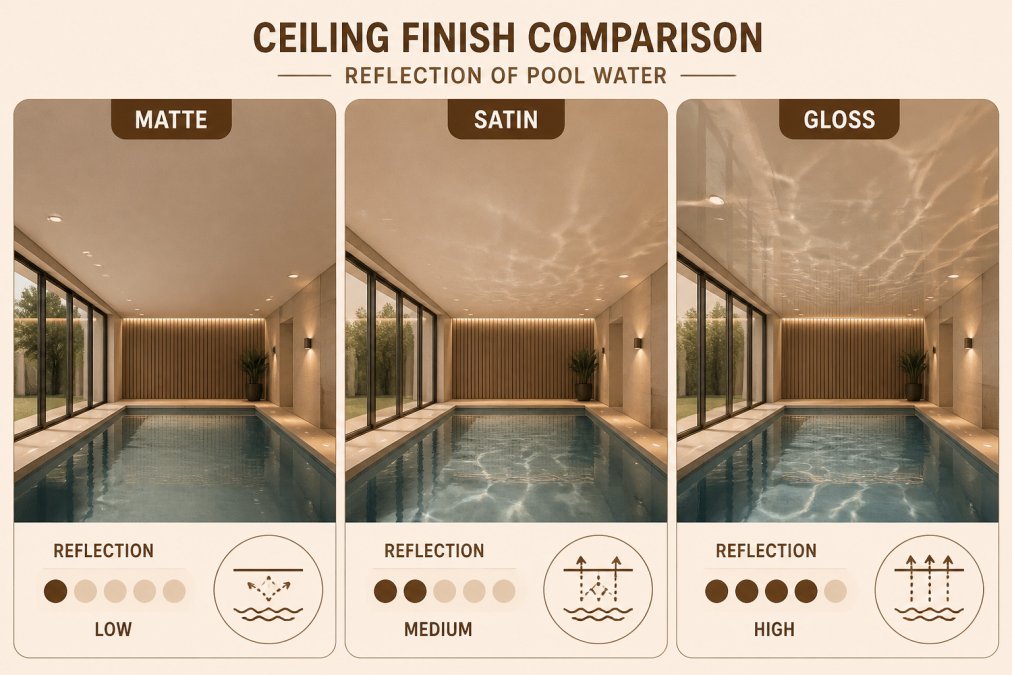
Neutral and Metallic Finishes: Matte, Satin and Gloss Compared
Finish is not a cosmetic afterthought in a pool room. It decides how the ceiling handles condensation, how easy it is to clean, how much glare reaches the water and how long the colour stays looking as intended. Two ceilings in the same colour but different sheens will look and behave quite differently after a year of chlorinated air.
How each sheen behaves in a pool room
Matt (often labelled flat) diffuses light in all directions, hiding minor undulations, joint lines and touch-up marks better than any other finish.
Satin (sometimes called eggshell or low-sheen) sits between matte and gloss.
Gloss and high-gloss reflect the most light and are the easiest to wipe clean, which is why they appear in commercial pool halls.
Metallic, pearlescent and sparkle finishes add a reflective quality that echoes moving water.
The humidity and condensation question
An indoor pool room is a permanently damp, warm, chlorinated environment.
- Cleanability matters more than sheen. A satin or gloss surface that can be wiped with a damp cloth and a pH-neutral cleaner will stay presentable longer than a beautiful matt that cannot be washed.
- Mould and mildew risk is highest where condensation sits longest, corners, ceiling perimeters and anywhere air movement is poor. Smooth, non-porous finishes with good ventilation behind them resist better than textured or porous ones.
- Chloramine staining shows most on pale, flat finishes, where a faint yellow-grey film becomes visible. Satin and gloss surfaces show it less and clean up more easily.
- Ventilation is part of the finish decision. A well-ventilated room keeps the ceiling drier and lets you choose a wider range of sheens. A poorly ventilated room pushes you towards smooth, washable, mould-resistant surfaces regardless of the look you want.
Neutral whites and greys: the safe choice, done properly
Neutral whites and greys suit most tile colours and rarely date, which is why they are the default recommendation when you are unsure. The risk is that they look plain. Three ways to add interest without losing the safety of a neutral:
- Use a warm white rather than a pure white. Pure white under cool LED light can look grey and clinical; a warm white keeps the room inviting.
- Vary the sheen rather than the colour. A satin field with a matt feature bay gives subtle definition without introducing a second colour.
- Let the lighting do the work. A neutral ceiling washed with indirect light reads far richer than the same colour under a single central fitting.
Matching finish to palette
- Cool blue and blue-grey palettes: satin works best. It keeps the blue crisp and is easy to maintain.
- Green and wood palettes: matte or low-sheen satin, to keep the natural feel soft and avoid a plasticky look.
- Neutral whites and greys: satin as the default, matte for a calmer feature area.
- Metallic and sparkle: feature bay only, in a satin or gloss base to keep cleaning manageable.
Guidance on ventilation and condensation control in indoor pools
Lighting Design: How Light Changes Your Chosen Palette
Lighting is where many palettes succeed or fail. Warm white bulbs soften cool colours and can make blues look greyer, while cool white light sharpens them.
Indirect lighting that washes across the ceiling is often the most flattering. It lifts the palette without creating harsh glare on the water. Ask a lighting specialist to show you how the chosen colour looks under the proposed fittings before installation.
Stretch Ceilings for Swimming Pools: Palette and Material Choices
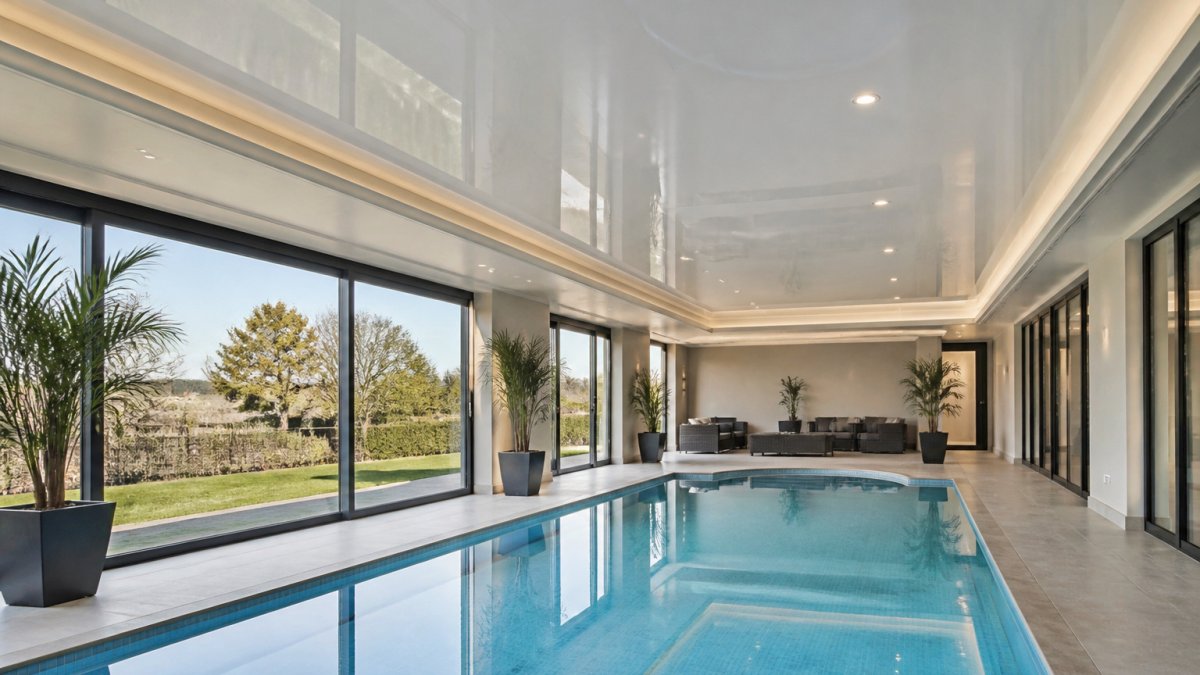
A stretch ceiling is a practical option for a pool room because it provides a smooth, continuous surface that can be finished in many colours and effects. The material choice also affects how the palette reads, since matte, satin and gloss membranes reflect light differently.
Confirm the membrane suits a humid, chlorinated room before choosing.
Choose Your Pool Ceiling Palette and Request a Consultation
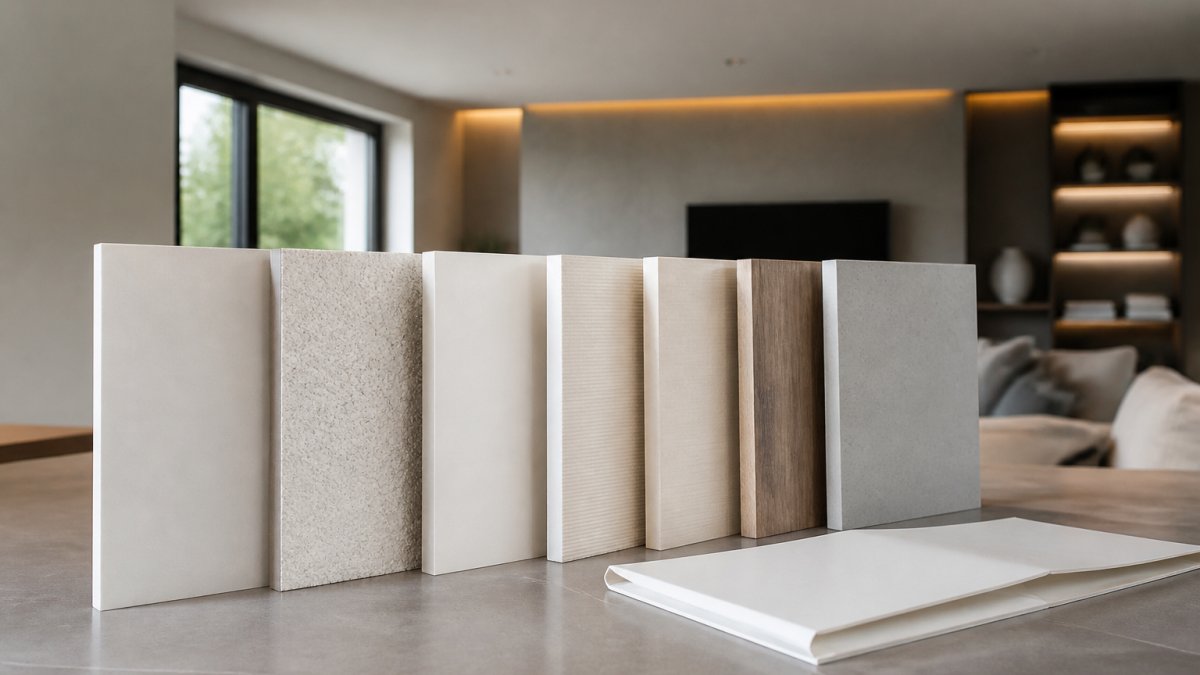
Start by choosing one palette direction: cool blue, green and wood, or neutral and metallic. Then test two or three samples in the room, under both daylight and your planned lighting. This simple step prevents most regrets.
When you are ready, request a consultation to talk through the palette and the finish for your pool room.
Frequently Asked Questions
What colour is best for an indoor swimming pool ceiling?
There is no single best colour, but white, soft grey and pale blue are the most popular choices because they reflect light well and keep the room bright. Stretch ceilings in these tones suit most pool rooms. Your choice should also depend on the size of the room, the amount of natural light and the finish you prefer. Stretcharama can show colour samples and advise on the best option for your space, and pricing depends on the size of the room and the chosen system, so request a quote for an accurate figure.
Do light or dark ceilings work better in indoor swimming pools?
Light ceilings usually work better in most indoor pools because they bounce light around the room and make the space feel larger and more open. Dark ceilings can create a more intimate, moody atmosphere, but they absorb light and can make a small room feel enclosed. For a pool with limited natural light, a lighter tone is often the safer choice. Darker tones can still work well in larger rooms with good artificial lighting.
Which ceiling finishes are suitable for humid pool environments?
Moisture-resistant materials matter most in a humid pool room. Gloss and satin finishes are easier to wipe clean than matte surfaces, which can show staining. Check the product's moisture rating and ask about maintenance requirements before deciding.
How should lighting influence an indoor pool ceiling colour?
Lighting has a large effect on how a colour appears. Warm lights can make blues look greener and greens look more yellow, while cool white light keeps colours true. Test your chosen palette under the actual lights you plan to use, and consider how daylight changes through the day. Reflective finishes will spread light across the water, so plan the lighting and ceiling finish together.