 blog
Stretch Ceiling vs Plastering: Cost Comparison 2026
Table of Contents
- Stretch Ceiling vs Plastering: The Cost Breakdown
- How Long Does a Stretch Ceiling Installation Take
- Benefits of Stretch Ceilings Over Plaster
- Plastering: What You Need to Know About Costs and Disruption
- Stretch Ceiling Maintenance Guide
- Durability and Longevity: Which Lasts Longer
- Making Your Choice: Stretch Ceiling or Plastering
- Frequently Asked Questions
Last Updated: September 30, 2026
Stretch Ceiling vs Plastering: The Cost Breakdown
When you're facing a damaged, cracked, or outdated ceiling, the decision between a stretch ceiling and traditional plastering shapes not just your budget but your entire renovation experience. The cost of stretch ceiling vs plastering varies significantly based on room size, complexity, and the disruption you're willing to tolerate. The financial picture is more nuanced than a simple price comparison.
Traditional plastering involves labour-intensive work: scaffolding, dust containment, multiple coats, drying time between applications, and often weeks of disruption. Stretch ceilings, by contrast, install in a single day with minimal mess. The true cost emerges when you factor in not just materials and installation, but also the hidden expenses of traditional methods, dust protection, redecorating, potential damage to furnishings, and lost time at home.
Both options deliver a flawless finish, but the path to get there differs dramatically. Understanding these differences helps you make a decision aligned with your priorities, timeline, and budget.
How Long Does a Stretch Ceiling Installation Take
A stretch ceiling installation typically completes in a single day, usually between 4 and 8 hours depending on room size and complexity. This speed fundamentally changes how you experience a renovation.
The process is straightforward: technicians install a perimeter track around your ceiling, heat the vinyl membrane to precise temperatures, and stretch it into place. No drying time. No return visits. Your room is functional the moment the crew leaves.
Plastering, by contrast, unfolds over weeks. Initial skim coat application takes a day or two, but then drying time begins, typically 24 to 48 hours before sanding. A second coat may follow, requiring another drying period. Sanding creates substantial dust. Priming and painting add further days. Many homeowners report plasterers returning multiple times to address settling cracks or imperfections.
For families with children, pets, or those working from home, this difference matters enormously. A stretch ceiling installation causes minimal disruption; you're back to normal use immediately. Plastering disrupts your space for weeks.
Benefits of Stretch Ceilings Over Plaster
Stretch ceilings deliver several distinct advantages that extend far beyond the initial installation.
The most obvious benefit is the absence of dust and mess. Plastering creates fine, persistent dust that settles on every surface, furniture, flooring, fixtures. Protecting your home from this dust requires extensive preparation and cleaning. Stretch ceiling installation produces virtually no dust, meaning your home remains usable and clean throughout the process.
Durability is another significant advantage. A quality stretch ceiling resists cracking, staining, and discolouration. Plaster, by contrast, is prone to cracking as buildings settle, and water damage causes permanent staining. If your ceiling has suffered water ingress, plaster repair often means replacing large sections. A stretch ceiling simply covers the damage permanently.
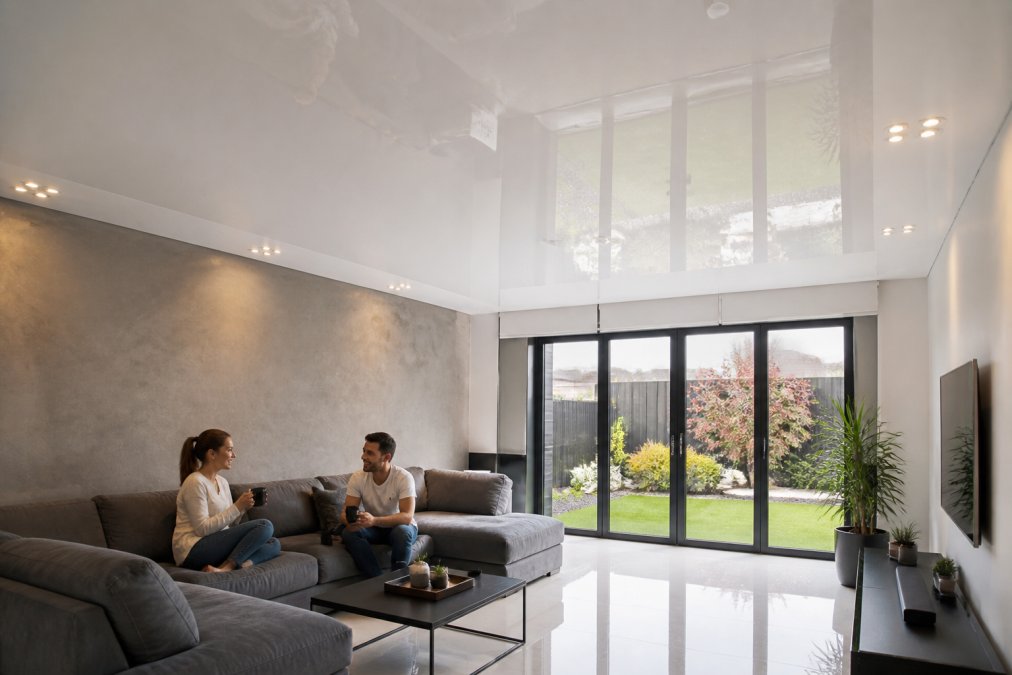
Aesthetic flexibility is substantial. Stretch ceilings come in various finishes, matt, satin, glossy, and can incorporate lighting solutions, acoustic properties, or moisture resistance. Plaster offers a traditional finish, but achieving custom effects requires additional expense and expertise.
For moisture-prone environments like bathrooms, kitchens, and indoor swimming pools, stretch ceilings excel. The vinyl resists humidity and prevents mould growth. Plaster absorbs moisture, leading to deterioration and mould development over time.
Installation speed also means less disruption to your life. No weeks of dust, noise, and restricted access to your space. Stretcharama completes most residential installations in a single day, allowing you to reclaim your home immediately.
Plastering: What You Need to Know About Costs and Disruption
Traditional plastering remains a popular choice, particularly for period properties and those seeking a conventional aesthetic. Understanding its true cost requires looking beyond the initial quotation.
A plasterer's quote typically covers labour and materials for the skim coat and finishing. However, the full cost equation includes preparation work, removing old plaster, repairing underlying damage, installing protective coverings throughout your home. Many homeowners discover additional issues once the old ceiling is exposed, requiring remedial work that increases the final bill.
The disruption factor carries a genuine cost. Dust protection requires plastic sheeting, tape, and careful containment. Furniture must be moved or covered. Repainting adjacent walls and ceilings often becomes necessary after the dust settles. Some homeowners report needing professional cleaning after plastering work completes.
Drying time creates another hidden cost: lost use of your space. Kitchens and bathrooms may be partially unusable during the work. Bedrooms require temporary relocation of furniture. This disruption extends across weeks, not days.
Quality variation in plastering is significant. A rushed job leaves visible trowel marks, uneven surfaces, or premature cracking. Achieving a truly flawless finish requires skilled labour, which commands higher prices. Stretch ceiling installations eliminate this variability, the finish is consistent and flawless by design.
Stretch Ceiling Maintenance Guide
One of the underrated advantages of stretch ceilings is their minimal maintenance requirements. Unlike plaster, which requires periodic repainting and crack repair, stretch ceilings need only occasional cleaning.
Dust accumulation is minimal because the smooth vinyl surface doesn't trap particles the way textured plaster does. A gentle wipe with a microfibre cloth removes any dust. For stubborn marks, a slightly damp cloth works effectively. Avoid abrasive cleaners or harsh chemicals, which can damage the vinyl.
The membrane itself requires no treatment, sealant, or protective coating. There are no cracks to fill, no paint to refresh, no structural settling to address. This simplicity translates to lower long-term costs compared to plaster, which often requires repainting every 5 to 10 years.
In moisture-prone environments like bathrooms and indoor pools, the stretch ceiling's resistance to humidity eliminates mould growth and water damage, problems that plague plaster ceilings. Condensation simply wipes away rather than being absorbed and causing deterioration.
Most homeowners find that a stretch ceiling requires virtually no maintenance beyond occasional dusting. This durability, combined with the initial speed of installation, makes stretch ceilings a low-effort, long-lasting solution.
Durability and Longevity: Which Lasts Longer
A well-maintained stretch ceiling typically lasts a long time before requiring replacement. The vinyl membrane resists cracking, staining, and discolouration far better than plaster.
Plaster ceilings, by comparison, show their age more quickly. Cracks appear as buildings settle, water damage causes permanent staining, and the surface becomes dingy over time. Repainting extends plaster's life cosmetically, but structural issues persist. A plaster ceiling damaged by water or impact requires patching or full replacement of affected sections.
The key difference lies in vulnerability. Plaster is porous and absorbs moisture, dust, and stains. It's rigid, so building movement causes cracking. Stretch ceilings are non-porous, flexible, and resistant to environmental factors that degrade plaster.
For properties in areas with high humidity, temperature fluctuations, or historic settlement issues, stretch ceilings provide superior longevity. Indoor swimming pools, in particular, benefit enormously from stretch ceilings, plaster would deteriorate rapidly in such environments, while stretch ceilings thrive.
The financial implication is straightforward: a stretch ceiling installed today likely outlasts multiple rounds of plaster repair and repainting over the same period.
Making Your Choice: Stretch Ceiling or Plastering
The decision between stretch ceiling and plastering ultimately depends on your priorities: speed, disruption tolerance, budget flexibility, and long-term maintenance appetite.
Choose plastering if you prefer a traditional aesthetic, have minimal disruption concerns, and are comfortable with periodic maintenance and repainting. Plastering suits period properties where authenticity matters and moisture exposure is minimal.
Choose a stretch ceiling if you value speed, minimal disruption, durability, and low maintenance. Stretch ceilings excel in modern properties, moisture-prone environments, and situations where you need your space functional immediately after installation. They're ideal for families with young children or pets, those working from home, and anyone seeking a contemporary finish without the hassle of traditional renovation.
For homeowners with damaged, stained, or outdated ceilings, particularly Artex from the 1980s, a stretch ceiling offers a swift, clean transformation.
Frequently Asked Questions
Are stretch ceilings cheaper than plastering in the UK?
Pricing depends on room size, ceiling condition, and material choices. Stretch ceilings typically cost more upfront but eliminate ongoing maintenance and disruption costs associated with plastering. Plastering may appear cheaper initially but requires multiple coats, drying time between applications, and potential remedial work if cracks reappear. For a fair comparison, factor in installation time, labour, and the cost of managing dust and debris during traditional plastering work.
How long does a stretch ceiling last compared to plaster?
Stretch ceilings typically last a long time with proper care, maintaining their appearance without cracking or sagging. Plastered ceilings can last 10-15 years before cracking, moisture damage, or settling causes visible wear. Stretch ceilings resist moisture better, making them ideal for bathrooms and kitchens. Plaster is more prone to damage from humidity, structural movement, and impact, often requiring repairs or recoating within 5-10 years in high-moisture environments.
Can you install a stretch ceiling over an existing damaged ceiling?
Yes, stretch ceilings can be installed directly over cracked, stained, or damaged ceilings, including old Artex. This eliminates the need for removal or extensive preparation. However, if your existing ceiling contains asbestos (common in Artex from the 1970s-1980s), you must have it tested and certified safe before installation. Plastering, by contrast, requires the old surface to be prepared, which may involve scraping, filling, and potentially disturbing asbestos-containing materials.
Does a stretch ceiling require more maintenance than a plastered ceiling?
Stretch ceilings require minimal maintenance: occasional gentle dusting and prompt attention to any water leaks from above. Plastered ceilings need more active care, including touch-ups for new cracks, repainting when marks or stains appear, and potential re-skimming if large areas become damaged. Stretch ceilings are particularly low-maintenance in moisture-prone areas like bathrooms and pool rooms, where plaster is susceptible to mould and deterioration.
If your ceiling is holding your room back, you don't have to accept weeks of disruption and dust. Stretcharama transforms damaged, cracked, and outdated ceilings into contemporary focal points in a single day. Our stretch ceiling installations cover stained plaster, modernise Artex, and deliver a flawless finish without the mess of traditional plastering. Request a consultation with our team to see how a stretch ceiling can revitalise your space.