 blog
Modern Ceiling Solutions for Homes: 7 Options
Table of Contents
- Why Modern Ceiling Solutions Matter
- Stretch Ceiling: The Dust-Free Alternative
- Plaster Ceiling Alternatives That Transform Your Space
- Ceiling Materials: Choosing the Right Finish for Your Home
- Ceiling Finishes for Homes: Moisture-Resistant Solutions
- Modern Ceiling Solutions for Problem Areas
- Making Your Choice: What to Consider
- Frequently Asked Questions
Last Updated: October 7, 2026
Why Modern Ceiling Solutions Matter
Your ceiling is the fifth wall of any room. Most homeowners ignore it until cracks appear, stains spread, or outdated finishes make spaces feel dated. The right ceiling solution transforms an entire property, not just visually, but in terms of durability, maintenance, and resale value.
The problem with traditional plastering is obvious: dust everywhere, weeks of disruption, and costs that mount quickly. Modern ceiling solutions skip all that. They're faster, cleaner, and deliver finishes that last without constant upkeep.
Whether you're dealing with cracked plaster, stained surfaces, or Artex from the 1980s, you have real options now. This guide covers seven approaches that work for different budgets, timelines, and room types, so you can choose what actually fits your home.
Stretch Ceiling: The Dust-Free Alternative
A stretch ceiling is a membrane stretched across a frame installed below your existing ceiling. It covers damage, creates a flawless finish, and requires no plaster dust or extended downtime.
Here's why they're popular:
- No mess, your home stays liveable during the job
- Works over cracked, stained, or Artex ceilings without removal
- Moisture-resistant options suit bathrooms and pool rooms
- Seamless appearance with no visible joints
Stretcharama specialises in stretch ceiling installations that modernise tired ceilings without the disruption of traditional renovation. The membrane comes in various finishes and colours, so you control the look.
One thing to know: the membrane is synthetic, so some people worry it looks plastic. Quality installations use materials that diffuse light evenly and feel genuinely modern. The membrane also hides pipework, wiring, and uneven surfaces above it, creating a clean aesthetic in older homes.
Plaster Ceiling Alternatives That Transform Your Space
If you want a traditional plaster finish without the dust and chaos, alternatives exist. Some skip plaster entirely and use different materials that achieve similar visual results.
Coffered Ceilings
A coffered ceiling uses a grid of recessed panels to add architectural interest. It's a statement piece, the kind of detail that catches the eye and adds perceived value to a room.
Coffered ceilings work in:
- Period properties where period detail suits the home
- Larger rooms with higher ceilings (they need height to work properly)
- Formal spaces like dining rooms or libraries
- Homes where you want a luxury feel without major structural work
You can build coffered ceilings from wood, plasterboard, or composite materials. Wood gives warmth and authenticity. Plasterboard is cheaper but requires careful finishing. Composite materials offer durability without maintenance.
The downside: they're labour-intensive to install and reduce ceiling height. In smaller rooms, that loss of space matters. They also trap dust and require regular cleaning.
Exposed Beams and Structural Design
Exposed beams create visual warmth and add character, especially in converted barns, period cottages, or modern homes designed to feel industrial.
Real timber beams work if your property has them already and you're simply revealing them. Fake beams (made from lightweight materials) offer the look without the weight or cost. Both work as a design statement.
Beams suit:
- Period properties with original timber structure
- Modern homes with a rustic or industrial aesthetic
- Rooms where you want to add visual interest without adding clutter
- Spaces with high ceilings where beams don't feel cramped
The reality: exposed beams collect dust and require occasional cleaning. They reduce usable ceiling height. And if your home doesn't have original beams, installing fake ones can feel forced, it works only if the rest of your design supports it.
Ceiling Materials: Choosing the Right Finish for Your Home
Modern ceiling solutions use different materials. Each has strengths depending on your room, budget, and maintenance tolerance.
Acoustic Panels
Acoustic panels absorb sound, making rooms quieter. They're popular in offices, studios, and homes near traffic noise.
They look industrial, visible holes or a textured surface. That's intentional. Some homeowners love the aesthetic. Others find it cold and dated.
Benefits:
- Sound dampening actually works
- Budget-friendly
- Easy to install and replace
- Available in different colours
Drawbacks:
- Collect dust in those holes
- Can look institutional
- Stain easily
- Limited design options
Acoustic panels suit utility rooms, basements, or music studios more than living spaces.
Wood and Timber Finishes
Timber ceilings add warmth and sophistication. Real wood brings natural grain and colour variation. Engineered wood or plywood mimics the look at lower cost.
Wood works in:
- Contemporary homes with minimalist design
- Rustic or farmhouse interiors
- Bedrooms and living rooms where warmth matters
- Period properties where timber suits the era
The catch: wood needs maintenance. It can warp, stain, or dry out. In damp rooms (bathrooms, kitchens), it struggles unless properly sealed. And it's expensive compared to other options.
Metal and Industrial Options
Metal ceilings, usually aluminium or steel, create a modern, industrial look. They're durable, moisture-resistant, and work in contemporary or warehouse-style spaces.
Metal suits:
- Modern apartments and lofts
- Kitchens and commercial-style homes
- Properties with an industrial aesthetic
- Rooms where durability matters more than warmth
Downsides: metal can feel cold and clinical. It conducts sound rather than absorbing it. And it's pricier than basic alternatives.
Ceiling Finishes for Homes: Moisture-Resistant Solutions
Bathrooms, kitchens, and indoor pools need moisture-resistant finishes. Standard plaster fails in these spaces, it absorbs water, stains, and deteriorates.
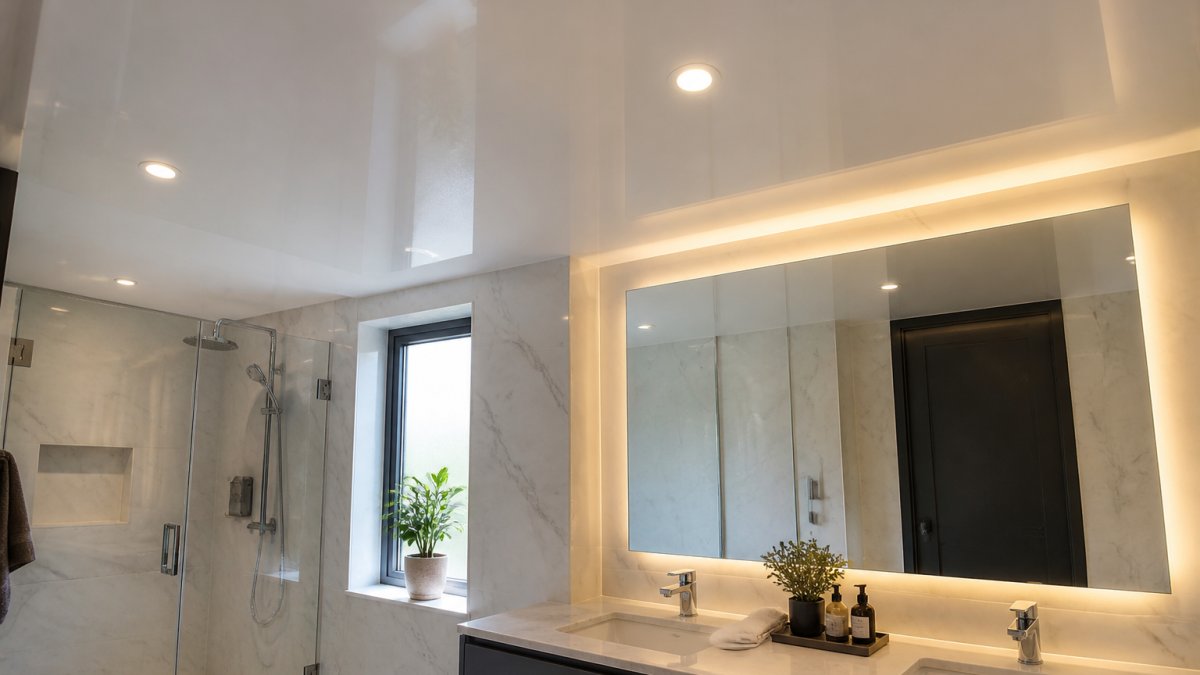
Moisture-resistant options include:
- Stretch ceilings with waterproof membranes
- Moisture-resistant plasterboard with proper ventilation
- Sealed wood finishes (though not ideal for high-moisture areas)
- Metal or composite panels that resist water damage
Stretch ceilings excel here because the membrane doesn't absorb water. It sheds moisture, making it perfect for steam-heavy bathrooms or pool rooms. Stretcharama's moisture-resistant installations handle the humidity without peeling, warping, or discolouring over time.
The key is ventilation. Even a moisture-resistant ceiling needs proper airflow to prevent mould and condensation buildup. A good extractor fan is non-negotiable in bathrooms and kitchens.
Modern Ceiling Solutions for Problem Areas
Some rooms present specific challenges. The right ceiling solution depends on what you're dealing with.
Bathrooms and Kitchens
These rooms demand:
- Moisture resistance
- Easy cleaning (no dust traps)
- Durability under temperature changes
- A finish that doesn't yellow or stain
Stretch ceilings tick all boxes. They're waterproof, wipeable, and won't sag when humidity spikes. Traditional plaster cracks and discolours. Acoustic panels absorb moisture and grow mould. Wood warps.
Kitchen ceilings also need to handle grease and steam. Stretch ceilings resist both. You can wipe them clean without damaging the finish.
Indoor Swimming Pools
Pool rooms are brutal on ceilings. Constant humidity, chlorine vapour, and temperature swings destroy most materials.
Standard options fail:
- Plaster absorbs moisture and crumbles
- Wood warps and rots
- Acoustic panels grow mould
- Metal rusts
Stretch ceilings designed for pool rooms use specialised membranes that resist chlorine and high humidity. They won't sag, discolour, or deteriorate. Installation still takes days, not weeks, so your pool stays usable quickly.
This is where Stretcharama's expertise matters. Pool ceilings need proper ventilation design and membrane selection. Get it wrong and you'll face problems within months.
Making Your Choice: What to Consider
Choosing a ceiling solution depends on several factors. Use this framework to narrow your options.
| Factor | What to Ask | Best Solution |
|---|---|---|
| Timeline | How quickly do you need it done? | Stretch ceiling (days) |
| Budget | Are you price-sensitive? | Acoustic panels or basic plasterboard |
| Moisture | Is this a wet room? | Stretch ceiling or sealed alternatives |
| Aesthetics | What look do you want? | Depends on style, timber for warmth, metal for modern |
| Maintenance | How much upkeep can you manage? | Stretch ceiling (minimal) |
| Disruption | Can your home handle weeks of work? | Stretch ceiling (minimal disruption) |
Start with the non-negotiables. If you need a moisture-resistant finish, that eliminates several options. If you need the job done in under a week, stretch ceilings are your answer. If you want maximum visual impact and have time, coffered ceilings or exposed beams create drama.
Then consider budget. Stretch ceilings cost more upfront than basic plasterboard but save money long-term through durability and low maintenance. Acoustic panels are cheap but look institutional. Timber is expensive and demands ongoing care.
Finally, think about your home's character. A modern apartment suits metal or stretch ceilings. A period cottage needs timber or plaster finishes that match the era. A contemporary loft can pull off industrial beams or coffered details.
Frequently Asked Questions
What is the difference between a stretch ceiling and traditional plaster?
Stretch ceilings are installed using a membrane stretched across a frame, whereas traditional plaster requires wet application, drying time, and creates significant dust. Stretch ceilings eliminate mess, complete faster, and work over existing damaged surfaces without removal. They're particularly suited to homes with cracked or stained ceilings where replastering would be disruptive.
Are modern ceiling solutions suitable for bathrooms and kitchens?
Yes. Moisture-resistant ceiling materials, including stretch ceilings, are specifically designed for high-humidity environments. They resist mould, condensation damage, and staining far better than traditional plaster. For bathrooms and kitchens, moisture-resistant finishes protect the structural integrity of your home whilst maintaining a modern aesthetic.
How long do modern ceiling solutions typically last?
Quality modern ceiling finishes, including stretch ceilings, are designed for durability with proper maintenance. They resist fading, cracking, and moisture damage better than traditional plaster. Lifespan depends on material choice, installation quality, and environmental conditions such as humidity levels.
Can modern ceiling solutions be installed over existing Artex ceilings?
Yes. Stretch ceilings and other modern solutions can be installed directly over Artex without removal, making them ideal for older homes. This approach avoids the disruption and cost of removing outdated textured finishes. However, if asbestos concerns exist, professional testing should be completed before installation to ensure safety.
Your ceiling deserves as much attention as your walls and floors. The right modern ceiling solution doesn't just fix damage, it elevates your entire space. Stretcharama delivers dust-free, fast ceiling installations that modernise tired finishes without the chaos of traditional plastering. Request a consultation to see how a stretch ceiling can transform your home, whether you're tackling cracked plaster, outdated Artex, or moisture-prone bathrooms and pool rooms.