 blog
Brilliance Ceiling vs Easy Ceiling: Which Suits Your Home?
Table of Contents
- Brilliance Ceiling vs Easy Ceiling: The Core Differences
- What Sets Brilliance Ceiling Apart
- Easy Ceiling: Simplicity and Speed
- Stretch Ceiling Installation: What to Expect
- Stretch Ceiling Bathroom Applications
- Stretch Ceiling Lighting Options and Integration
- Stretch Ceiling Maintenance and Durability
- Which Option Should You Choose?
- Frequently Asked Questions
Last Updated: 12 October 2026
Brilliance Ceiling vs Easy Ceiling: The Core Differences
When you're facing a cracked, stained, or outdated ceiling, stretch ceiling systems offer a modern, seamless finish without the mess of traditional plastering. Choosing the right system depends on what matters most to your home.
The core difference lies in installation complexity, finish quality, and suitability for specific rooms. Brilliance Ceiling positions itself as a premium option with a high-gloss, reflective surface that maximises light in rooms. Easy Ceiling emphasises speed and simplicity, using a matte finish that's easier to maintain and suits most domestic applications. Understanding how brilliance ceiling vs easy ceiling approaches differ will help you make the right choice for your property.
Both systems eliminate the disruption of traditional plastering. No plaster dust clouds your home. No weeks of scaffolding and noise. No need to vacate rooms while work happens. That's the shared benefit. What changes is the aesthetic result, the installation timeline, and the long-term maintenance profile.
What Sets Brilliance Ceiling Apart
For a precise quote tailored to your space, Stretcharama can provide a consultation.
Easy Ceiling: Simplicity and Speed
The matte finish is also slightly less effective in moisture-heavy environments. Whilst it performs adequately in standard bathrooms, rooms with constant high humidity, like indoor swimming pools or commercial kitchens, benefit more from the moisture resistance of a glossy finish.
Stretch Ceiling Installation: What to Expect
Stretch ceiling systems follow a core installation process. Understanding what happens during fitting helps you prepare your home and set realistic expectations.
The process starts with a site survey. The installer measures your room, checks for any structural issues, and identifies the best placement for the ceiling frame. This typically takes 30 minutes to an hour. They'll discuss your chosen finish and confirm any lighting or ventilation requirements.
Next comes the frame installation. An aluminium track is fitted around the perimeter of your room, slightly below where your new ceiling will sit. This track holds the membrane in place. The work is clean and relatively quiet, though there's some drilling involved. Most homeowners can remain in the house during this stage.
The membrane itself arrives custom-made to your room's exact dimensions. On installation day, the room is heated to a specific temperature, which softens the PVC membrane. The material is stretched into the frame using specialist tools.
Once stretched, the ceiling is left to cool and set. The entire process typically takes 4-8 hours depending on room size and complexity. You'll want to keep the room empty during this time, but the work produces minimal disruption compared to traditional plastering.
After installation, the room is cleaned, any protective coverings are removed, and your new ceiling is ready to use. Most homeowners are surprised by how quickly the transformation happens, and how little mess is created.
Stretch Ceiling Bathroom Applications
Bathrooms are where stretch ceiling technology truly shines. Moisture, humidity, and steam are constant challenges in traditional ceiling materials. Stretch ceilings handle these conditions far better than plaster or standard plasterboard.
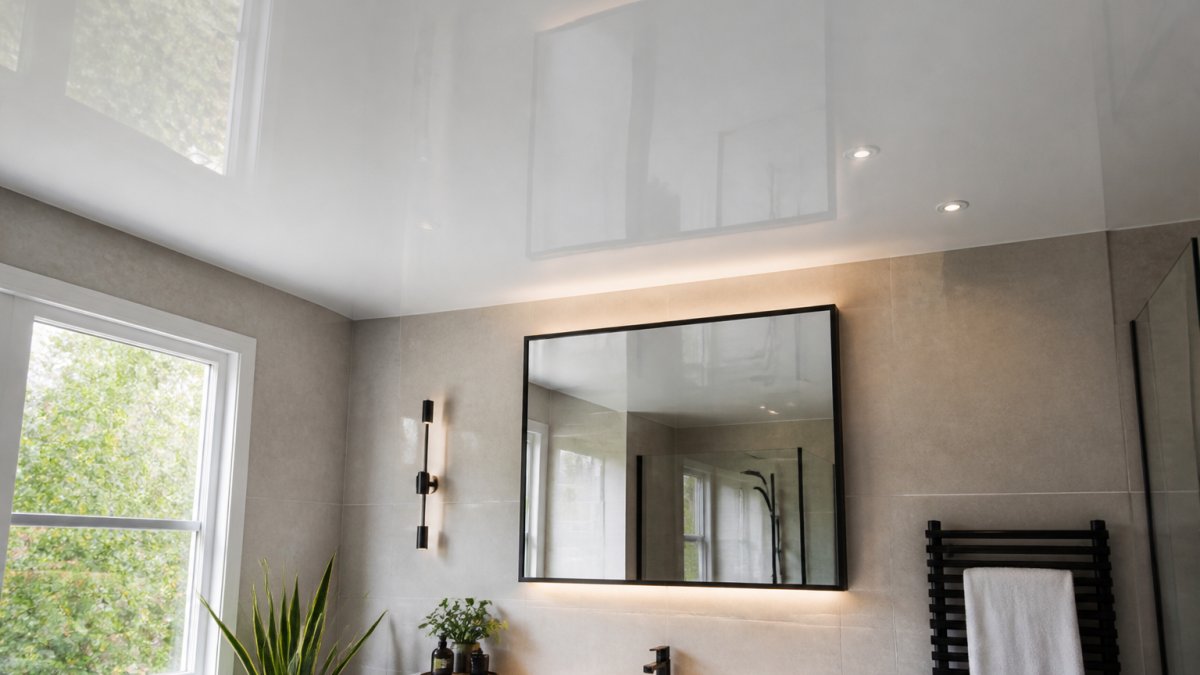
Both systems eliminate the need for repeated repainting or mould treatment. Traditional ceilings in bathrooms require regular maintenance to manage staining and growth. Stretch ceilings remove that burden entirely. A simple wipe-down with a soft cloth every few months keeps either finish looking fresh.
The installation process in bathrooms is identical to other rooms, though the installer will confirm that your extractor fan is working properly beforehand. A functioning extractor fan helps manage humidity and extends the life of any ceiling system.
Stretch Ceiling Lighting Options and Integration
Modern ceilings aren't just about covering up damage, they're an opportunity to integrate lighting that transforms a room. Stretch ceilings accommodate recessed spotlights, LED strips, and pendant fittings seamlessly.
The installation process is straightforward with either system. Lighting is fitted before the membrane is stretched, so there's no need to cut holes or make adjustments after the ceiling is in place. Most installers can work with your existing wiring or help you plan a new lighting layout.
Both systems support LED technology, which is energy-efficient and generates minimal heat. This matters because stretch ceilings shouldn't be exposed to sustained high temperatures. LED lighting solves this problem entirely.
Stretch Ceiling Maintenance and Durability
One of the biggest advantages of choosing a stretch ceiling is the minimal maintenance required. They outlast traditional ceilings by years, and the upkeep is straightforward.
Stretch ceiling systems are durable. The PVC membrane resists fading, discolouration, and degradation for 15-20 years or more with normal use. They won't sag, crack, or peel like traditional ceilings do. If a puncture does occur, unlikely in a domestic setting, it's repairable without replacing the entire ceiling.
Stretcharama's installations come with support and guidance on care. Knowing how to maintain your chosen system ensures it performs reliably for years.
Which Option Should You Choose?
Choosing a stretch ceiling system comes down to your priorities: aesthetics, budget, and room function.
Stretch ceiling technology delivers the core promise: no plaster dust, no delays, and no disruption. It covers cracked, stained, or artex ceilings effectively and modernises outdated spaces in a single installation.
The best approach is to discuss your specific needs with a professional. Stretcharama can assess your rooms, explain how each option performs in your environment, and provide a tailored recommendation. A consultation clarifies which system suits your home, your timeline, and your budget.
Choosing the right ceiling system transforms how your home looks and feels. Stretch ceiling technology eliminates the mess and disruption of traditional plastering. Stretcharama delivers flawless installations that cover cracked ceilings, modernise artex, and provide a durable, contemporary finish. Request a consultation to see which option works best for your property.
Frequently Asked Questions
What is the main difference between Brilliance Ceiling and Easy Ceiling?
Different stretch ceiling systems may offer varying features, such as premium finishes, durability, integrated lighting, or moisture resistance, making them suitable for different residential projects and environments. Others may focus on straightforward installation, faster turnaround, and cost-effectiveness, appealing to homeowners wanting a quick ceiling upgrade without complexity. All are stretch ceiling systems, but they can target different priorities: quality and longevity versus speed and simplicity.
Can a stretch ceiling be installed in a bathroom?
Yes, stretch ceilings work excellently in bathrooms. They resist moisture, prevent mould growth, and eliminate the condensation problems common with traditional plasterboard. Stretch ceiling bathroom solutions are particularly valuable in damp-prone areas because the material doesn't absorb water and won't sag or crack from humidity. This makes them ideal for en-suites, shower rooms, and bathrooms with poor ventilation.
How long does stretch ceiling installation take?
Most stretch ceiling installation projects complete within one to three days, depending on room size and complexity. The process is non-disruptive, with minimal mess compared to traditional plastering, so you can often use your home normally within hours of completion.
How do you maintain and clean a stretch ceiling?
Stretch ceiling maintenance is straightforward. Dust the surface occasionally with a soft, dry cloth or use a gentle vacuum with a brush attachment. For marks or stains, use a damp microfibre cloth with mild soapy water, then dry immediately. Avoid abrasive cleaners, rough materials, or sharp objects. Stretch ceilings resist staining and don't harbour dust like textured plaster, making them far easier to keep clean than traditional ceilings, particularly in kitchens and bathrooms.